Jia Lissa
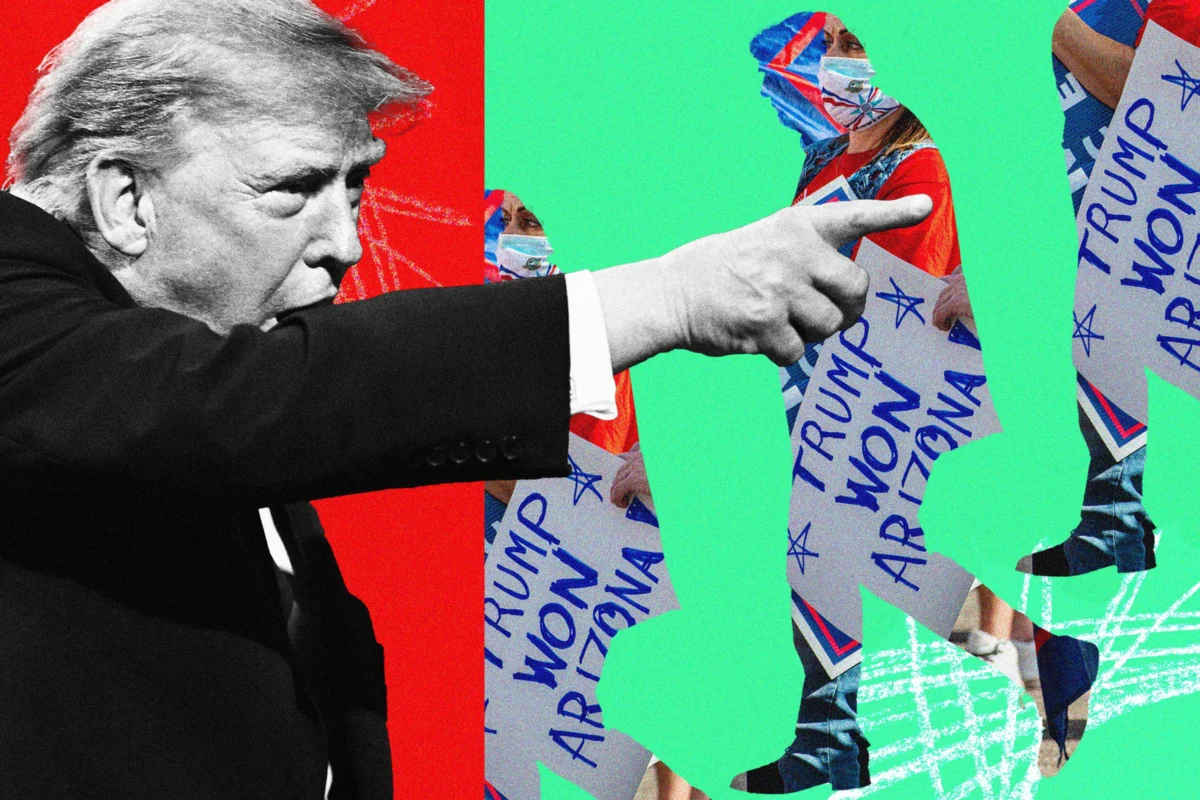
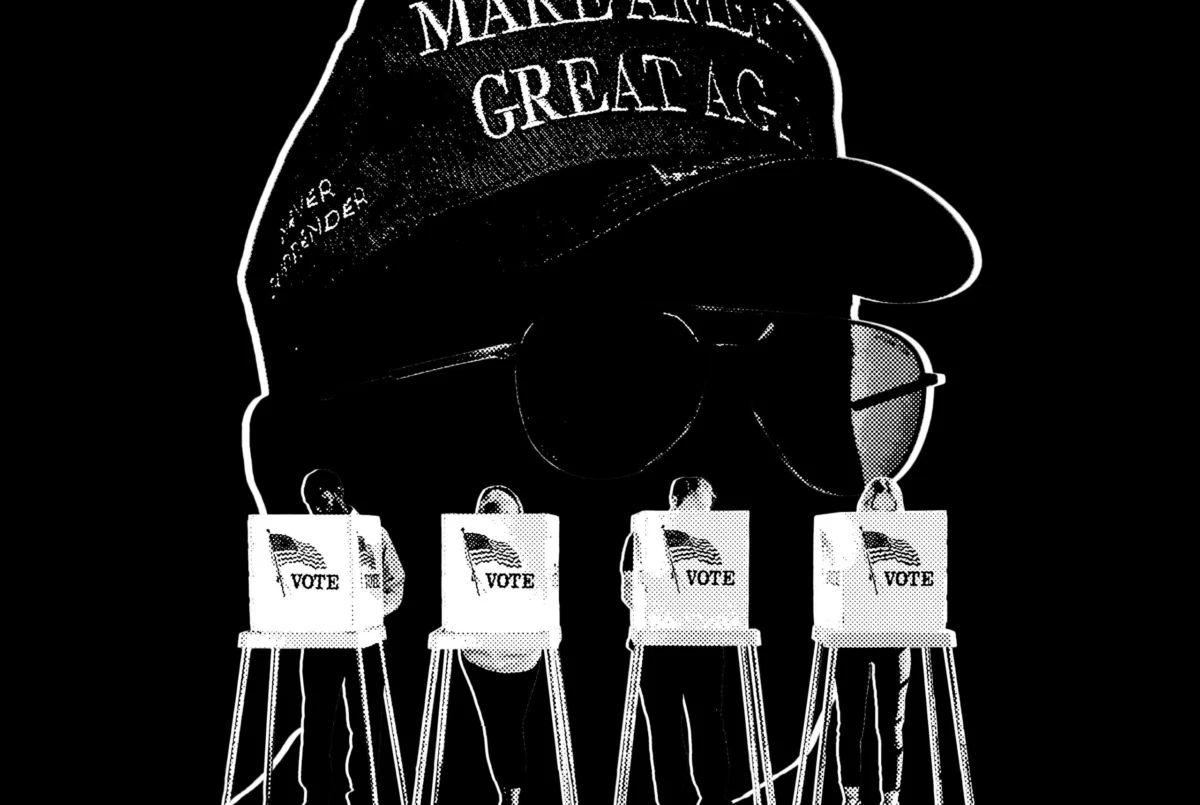
Maricopa County, Arizona, has once again become the epicenter of intense scrutiny and baseless allegations concerning election integrity, just weeks before a crucial midterm election. The resurgence of these claims, echoing the tumultuous aftermath of the 2020 presidential election, is largely fueled by former President Donald Trump and a network of election denial activists who continue to undermine public trust in democratic processes. This renewed focus on Maricopa comes amidst a series of events, including a misprinted ballot mailing, a politically charged video alleging tampering, and a swift but ultimately dismissed FBI investigation, all contributing to a persistent narrative of corruption despite a complete lack of evidence.
The Genesis of Renewed Scrutiny: Trump’s Remarks and Preceding Incidents
The current wave of controversy gained significant momentum last week when former President Donald Trump publicly declared, "Maricopa is a very, very dishonest county." This statement served as a direct echo of his rhetoric following the 2020 election, when Arizona’s largest county became the primary battleground for unsubstantiated claims of widespread voter fraud. The timing of Trump’s remarks, delivered with just over two weeks remaining until the midterms, signaled a deliberate effort to re-engage with and amplify existing doubts about election security.
Before Trump’s direct attack, Maricopa County had already experienced several incidents that, while routine or easily explained, were quickly seized upon by election skeptics. In March of this year, the FBI refocused national attention on the county when it seized dozens of hard drives and servers containing data from the controversial Cyber Ninjas audit. This audit, commissioned by Arizona Republicans following the 2020 election, spent months reviewing Maricopa County’s ballots and equipment, ultimately confirming President Biden’s victory and finding no evidence of widespread fraud. However, the FBI’s interest in the audit’s data, though not directly linked to new fraud allegations, provided fresh fodder for those who believe irregularities persist.
Further stoking the flames, Maricopa County election officials recently acknowledged that approximately 3,000 ballots had been mistakenly mailed early to voters. While officials promptly addressed the error and outlined steps to ensure no voter was disenfranchised or counted improperly, the incident was immediately weaponized by critics. Trump, seizing on the opportunity, told reporters that county election officials should "be ashamed of themselves," framing the administrative misstep as evidence of systemic incompetence or malfeasance rather than an isolated, correctable error. Such incidents, even when fully explained and rectified by election authorities, are frequently distorted and integrated into a broader narrative of a "rigged election" by those seeking to sow distrust.
The "BUSTED" Video: A Viral Claim and Swift Debunking
The most significant catalyst for the recent surge in election integrity claims emerged last weekend with the viral dissemination of a video by the "We the People USA Alliance," a group prominent in propagating baseless claims about voter fraud in Maricopa County in 2020. The video, posted on X (formerly Twitter) with the inflammatory caption "BUSTED," depicted two Maricopa County employees working late on October 7 inside the ballot tabulation center. The post insinuated nefarious activity, specifically accusing the employees of "inserting flash drives into computers… during an active election." The post also explicitly named a Maricopa County employee who had previously been subjected to similar unfounded claims and threats in 2021, highlighting a pattern of targeted harassment against election workers.
The video rapidly accumulated over one million views, propelled by high-profile figures within the election denial movement. Among them was Kari Lake, a former television star who now serves as a senior adviser in the Trump administration. Lake, known for her own history of challenging election results—having lost gubernatorial races in 2022 and US Senate races in 2024 and subsequently claiming fraud—amplified the video on her X account, stating, "More shenanigans at the Maricopa county ballot tabulation center. Only through God’s intervention was this even discovered." This divine attribution, however, was quickly challenged by Maricopa County officials.
Jennifer Liewer, the deputy elections director for communications in Maricopa County, clarified that the video originated from a non-public backup livestream camera. While active, this particular camera is not among those publicly available on the county’s website. A source familiar with the situation, speaking anonymously due to not being authorized to speak on the record, revealed to WIRED that members of the We the People group had obtained the IP address for this camera years prior, allegedly allowing them to continuously monitor the feed. We the People USA Alliance did not respond to requests for comment regarding how they obtained access to the non-public stream.
In response to the escalating misinformation, the Maricopa County Board of Supervisors issued a formal statement that debunked the claims. The statement clarified that the employees shown in the video were "performing authorized and necessary work to update software and upload election data to a computer terminal that is not connected to the internet or ballot tabulation equipment." This explanation underscores standard election security protocols, where critical systems are air-gapped from external networks to prevent unauthorized access and manipulation. The work depicted was a routine, albeit late-night, operational task, consistent with preparing election machinery.
From Social Media to Formal Investigation: The FBI’s Role
Despite the clear and swift rebuttal from Maricopa County officials, the "We the People USA Alliance" remained unconvinced. Shelby Busch, the founder of the group and a representative for the Republican National Committee (RNC), escalated the matter by contacting Maricopa County Recorder Justin Heap. Heap, known for his alignment with former President Trump’s political views, subsequently had his office contact the FBI to formally investigate the allegations. This move demonstrates the significant pressure placed on election officials by activist groups, even when claims have been publicly addressed.
The FBI, taking election integrity seriously, referred the matter to an investigator from the Arizona Attorney General’s office for a preliminary review. The investigation was remarkably brief, with the AG’s office quickly concluding that there was no basis for further inquiry. A report seen by 12News confirmed the absence of any wrongdoing. An FBI spokesperson reiterated the agency’s commitment to election security, stating, "Election integrity is one of the top priorities of this FBI, and we continue to work around the clock to pursue criminal actors who seek to undermine our system and the rule of law." Both the RNC and Shelby Busch did not respond to requests for comment regarding the FBI’s conclusion.
The Echo Chamber: Persistent Claims in the Face of Debunking
The swift closure of the FBI’s investigation did little to quell the spread of conspiracy theories. On Thursday, Shelby Busch appeared on Steve Bannon’s War Room podcast, a platform frequently used to amplify election denial narratives. During her appearance, Busch repeated the debunked claims, insisting that something nefarious had occurred. She further stated that she had contacted the Department of Homeland Security and the Department of Justice, urging them to investigate the matter further. Bannon, a prominent figure in conservative media and a former Trump strategist, echoed her sentiments, asking, "Can somebody get involved here?" This illustrates how even officially debunked claims can persist and proliferate within specific media ecosystems, continuing to erode trust among their audiences. The Justice Department, DHS, and the White House did not respond to requests for comment on Busch’s claims.
Maricopa County: A "Trope" in the Election Denial Playbook
The recurring targeting of Maricopa County is not accidental; it has become a strategic component of the broader election denial movement. Kate Starbird, cofounder of the Center for an Informed Public at the University of Washington, highlights this phenomenon. "At this point, people are tuned into Maricopa as a focus of election rumors," Starbird tells WIRED. She points to past incidents, such as "Sharpie pens bleeding through ballots in 2020" and "tabulator machines not reading ballots in 2022," as examples of how Maricopa has been cemented in the public consciousness as a site of alleged electoral malfeasance.
Starbird explains that "Maricopa has become a familiar setting, a place where election issues arise or are perceived to arise, and where those issues get wrapped into ‘rigged election’ conspiracy theories." Her research, which includes creating a "bingo card" of common narrative tropes in election rumors, reveals that these claims often share similar, easily digestible structures that make them "remixable for rumor producers." In this context, Maricopa County functions as a pre-packaged "trope"—a suspicious setting, a ready-to-use building block for constructing new rumors or conspiracy theories, regardless of factual basis.
The repeated emphasis on Maricopa is also tied to its demographic and political significance. As the fourth-largest county in the United States, with a population exceeding 4.5 million, Maricopa County plays an outsized role in Arizona’s statewide election outcomes. Its diverse electorate, encompassing urban, suburban, and exurban communities, often reflects broader national political trends. Consequently, questioning the integrity of Maricopa’s elections can cast doubt on the legitimacy of results across the entire state and, by extension, influence national political narratives.
Broader Implications for Democracy and Election Administration
The persistent dissemination of unsubstantiated election fraud claims, particularly those targeting specific counties like Maricopa, carries profound implications for American democracy. Foremost among these is the erosion of public confidence in the electoral system itself. When a significant portion of the electorate believes that elections are fundamentally corrupt, it undermines the peaceful transfer of power, discourages civic participation, and fosters political instability. A 2023 survey by the Pew Research Center found that only about half of U.S. adults are confident in the honesty of U.S. elections, a sentiment heavily influenced by political affiliation and exposure to misinformation.
For election administrators, the ongoing barrage of accusations presents immense operational and psychological challenges. They are forced to divert significant resources—time, personnel, and finances—to repeatedly debunk claims, respond to inquiries, and defend their processes, often under intense public scrutiny and even threats. The incident involving the non-public camera feed highlights the lengths to which some groups will go to seek out or manufacture perceived irregularities, placing an additional burden on counties to secure every aspect of their operations, both digital and physical. The targeting of individual election workers, as seen with the named Maricopa County employee, also creates a hostile environment, potentially driving experienced professionals away from public service.
Furthermore, the involvement of high-profile political figures like former President Trump and Kari Lake in amplifying these narratives lends them a veneer of legitimacy for their supporters, making factual corrections more difficult to penetrate. Their rhetoric can mobilize activist groups and influence official actions, as demonstrated by Recorder Heap’s decision to involve the FBI. This creates a cycle where unsubstantiated claims are amplified, trigger official responses, and even when debunked, are then used as further evidence of a "cover-up" or systemic issue.
As the midterm elections approach, the ongoing saga in Maricopa County serves as a stark reminder of the challenges facing election integrity in the United States. Despite exhaustive audits, legal challenges, and official investigations consistently affirming the security and accuracy of the county’s elections, a persistent and well-organized movement continues to leverage every administrative misstep and operational detail to fuel a narrative of fraud. The resilience of these narratives, even in the face of overwhelming evidence to the contrary, underscores the urgent need for comprehensive strategies to combat misinformation and reinforce the foundational principles of democratic trust. The focus on Maricopa County, therefore, is not merely about one county’s election administration; it is a microcosm of the broader struggle for truth and confidence in the American democratic process.