admin
admin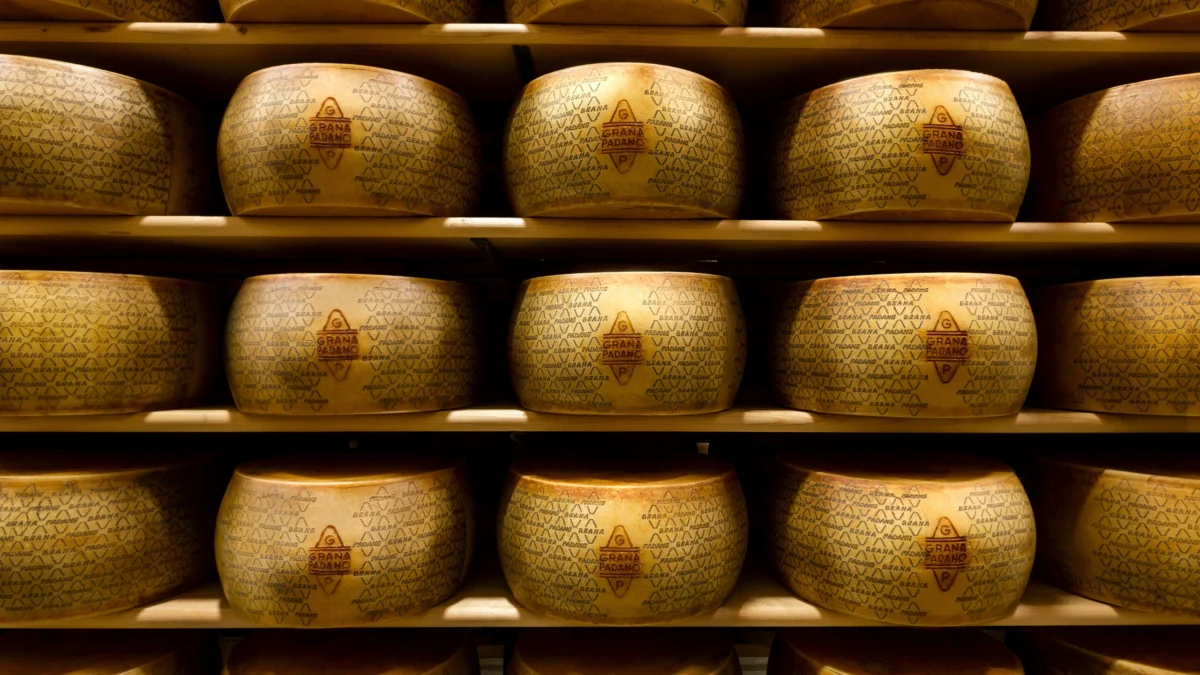
The story of Grana Padano is more than just the chronicle of a beloved Italian cheese; it is a testament to centuries of agricultural innovation, monastic dedication, and the enduring power of tradition. Originating in the fertile Po River Valley of Northern Italy, this iconic hard cheese, recognizable by the diamond-shaped brand and the cheese’s name burned into its rind, boasts a lineage stretching back to the 12th century. Its creation was not a matter of culinary whim, but a pragmatic solution born from the ingenuity of Cistercian monks at Chiaravalle Abbey, near Milan.
The Monastic Origins of a Culinary Marvel
In an era when food preservation was a paramount concern, the monks faced the challenge of transforming the marshy, unproductive landscape of the Valle Padana into a source of sustenance. Guided by the principles of the Rule of Saint Benedict, which emphasized a balance between prayer and productive labor, they pioneered innovative agricultural techniques. Their primary focus was on reclaiming the land for cultivation, specifically to grow high-quality fodder for dairy cattle. This foresight allowed them to establish a consistent and rich milk supply.
However, the abundance of fresh milk and the resulting dairy products presented a new dilemma: how to preserve this valuable food source for the long term. The monks’ solution was to develop a method of cheese-making that, remarkably, remains largely unchanged in its fundamental principles today. They began by heating milk in large copper cauldrons, a practice that allowed for precise temperature control. The addition of rennet, a natural coagulating enzyme, initiated the separation of curds from whey. The curds were then meticulously cut into very small pieces, a critical step that influences the final texture and moisture content of the cheese. These tiny curds were then molded, salted, and aged, laying the groundwork for what would become one of the world’s most recognized and appreciated cheeses. This pioneering effort by the monks of Chiaravalle Abbey is widely recognized as the genesis of the world’s first large-scale cheese dairy.

From "Old Cheese" to a National Icon
The cheese produced by these early monastic efforts was initially known by its Latin name, "caseus vetus," meaning "old cheese." However, among the common people, who were not schooled in Latin, it became affectionately known as "grana," a term derived from its characteristic granular texture. As the practice of cheese-making spread beyond the confines of the monastery and throughout the surrounding provinces, regional variations emerged. Cheese produced in Milan was called "grana Milanese," and that from Mantua became known as "grana Mantovano." These local designations reflected the distinct nuances and traditions of each area, yet they all shared the fundamental "grana" characteristic.
This versatile cheese quickly became an emblematic food across Italian society. Its portability, nutritional value as a good source of protein, and agreeable flavor made it a staple enjoyed by all social strata, from the peasantry to the aristocracy, throughout the Renaissance and well into the modern era. Its accessibility and widespread appeal cemented its place in the Italian culinary landscape.
Codification and Global Recognition: The Birth of Grana Padano PDO
The evolution of Grana Padano from a collection of regional "grana" cheeses to a unified, protected designation took centuries. A pivotal moment arrived in 1954 when the Italian government officially codified the name "Grana Padano." This landmark decision aimed to consolidate the various regional grana cheeses under a single, broader geographical indication, thereby standardizing quality and promoting the cheese on a national scale. Concurrently, the Grana Padano Protection Consortium was established to oversee and safeguard the production and identity of the cheese.
The international recognition of Grana Padano’s unique heritage and quality reached new heights in 1996 when it was awarded the prestigious European Union’s Protected Designation of Origin (PDO) status. This designation is a powerful seal of authenticity, guaranteeing that the cheese is produced, processed, and prepared in a specific geographical area using traditional methods and that its quality and characteristics are intrinsically linked to its place of origin.

Today, the Grana Padano Protection Consortium is a robust organization comprising 134 member dairies. The sheer scale of production is impressive: in 2025 alone, these dairies collectively produced over 6 million wheels of Grana Padano PDO. The consortium’s mandate extends beyond mere nomenclature protection; it is actively involved in the global promotion of Grana Padano PDO and rigorously governs every aspect of its production. This meticulous oversight ensures that each wheel of Grana Padano PDO adheres to the strict standards established under the PDO regulations, safeguarding its centuries-old legacy.
The Rigorous Production Standards of Grana Padano PDO
The commitment to quality and tradition is deeply embedded in the detailed production specifications for Grana Padano PDO. These regulations begin with the diet of the dairy cows. A significant portion of their feed, at least 75 percent of the dry fodder (such as hay) and all fresh forage, must be grown within the designated cheese production area. This ensures that the milk’s composition reflects the specific terroir of the Valle Padana.
Raw milk used in Grana Padano PDO production must be collected within 24 hours of milking. A crucial step in the traditional process is the partial skimming of the milk, which allows for the natural separation of cream. This is followed by the introduction of a natural whey starter, a practice that contributes to the cheese’s unique microbial profile and flavor development. The milk is then gently heated in copper or copper-lined vats, a method that has been employed since the monastic era and is believed to contribute to the cheese’s final characteristics.
The coagulation process is initiated by the addition of calf rennet. Once the milk has set, a specialized tool called a "spino," resembling a large whisk, is used to break the curd into rice-sized pieces. This precise cutting is vital for the cheese’s texture. The small curds are then carefully packed into round molds, where they remain for at least 36 hours, allowing them to settle and consolidate.

Following the molding process, the wheels undergo a critical brining stage. They are immersed in a salt solution for a period ranging from 14 days to a full month. This salting process not only enhances flavor but also plays a vital role in preservation and the development of the cheese’s rind. The aging process, or "stagionatura," is the final, defining phase. Grana Padano PDO must be aged for a minimum of nine months, with many wheels maturing for up to 24 months or even longer. Wheels that have been aged for over 20 months are eligible to be labeled as "Riserva," signifying a deeper, more complex flavor profile.
The Sensory Experience and Culinary Versatility
The culmination of this meticulous production process is a cheese with a distinct and appealing sensory profile. A bite into a piece of Grana Padano PDO reveals a harmonious balance of flavors. The initial sweetness of fresh milk is complemented by a savory, nutty undertone, reminiscent of toasted almonds. Younger wheels offer a milder, creamier experience, while the Riserva versions, with their extended aging, develop a more pronounced, crystalline texture. These aged wheels can become flakier and more granular, yet they retain a delicate flavor, avoiding any hint of dryness or crumbliness.
Grana Padano PDO’s versatility in the kitchen is one of its most celebrated attributes. It excels on a cheese board, offering a delightful contrast of textures and flavors. It is a classic pairing with Prosciutto di Parma PDO, where the salty, savory notes of the cured ham are beautifully complemented by the cheese. Drizzled with aged balsamic vinegar, this combination creates a sophisticated and irresistible appetizer. Its adaptability extends to culinary applications, serving as a rich and flavorful filling for ravioli and other stuffed pastas. Furthermore, its granular nature makes it an ideal grating cheese, adding depth and umami to soups, pasta dishes, risottos, and a wide array of other savory creations.
Nutritional Benefits and a Taste of History
Beyond its culinary merits, Grana Padano PDO offers significant nutritional benefits, making it a valuable component of a healthy diet. It is naturally lactose-free and gluten-free, making it suitable for individuals with dietary restrictions. The cheese is also low in fat and an excellent source of high-quality protein, calcium, and vitamin B12. A modest 30-gram serving, just over one ounce, provides a comparable nutritional density to a pint of milk, highlighting its power as a nutrient-rich food. This makes it an ideal snack to combat the common "afternoon slump" for both children and adults, offering sustained energy and essential nutrients.

When sharing Grana Padano PDO with others, there is an opportunity to connect them with a rich culinary heritage. By savoring this cheese, individuals are not merely enjoying a delicious food item; they are participating in a tradition that spans over a thousand years of Italian history. It is a tangible link to the ingenuity of medieval monks and the enduring agricultural practices of the Po River Valley.
The production and promotion of Grana Padano PDO are supported by the European Union, reflecting its status as a protected product of significant cultural and economic importance within the EU. The views and opinions expressed in its promotion are those of the producers and advocates, underscoring the authenticity and regional pride associated with this esteemed cheese.
The enduring appeal of Grana Padano PDO lies not only in its exquisite taste and culinary adaptability but also in its deep historical roots and the meticulous dedication to tradition that underpins its production. It is a cheese that tells a story – a story of innovation, perseverance, and the timeless pursuit of culinary excellence, a story that continues to be savored by people around the globe.