admin
admin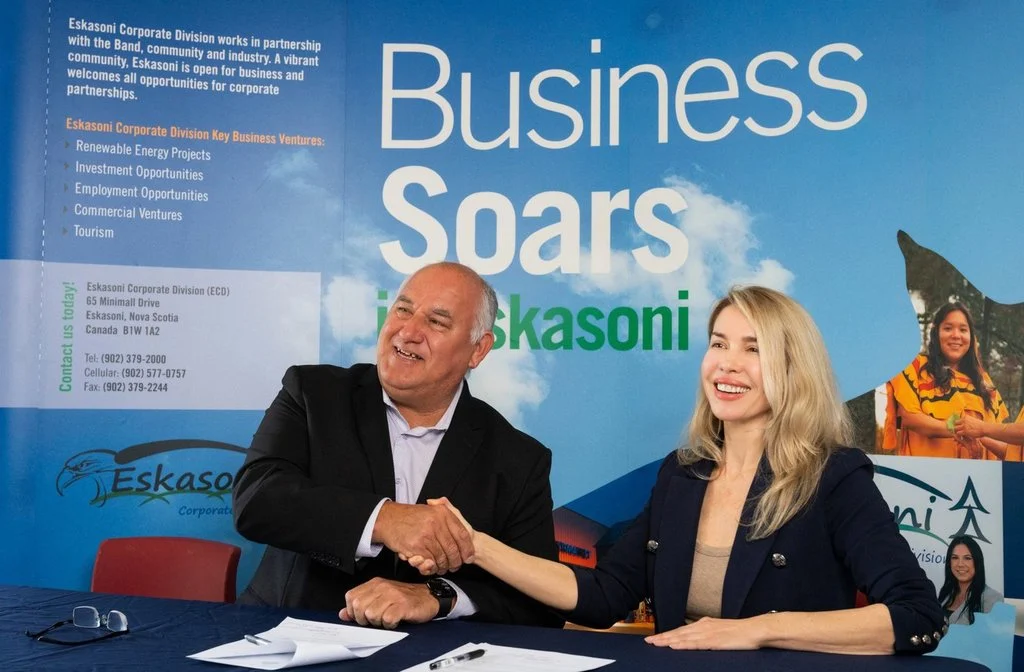
In a significant move poised to redefine clean energy production and Indigenous economic development in Canada, the Eskasoni First Nation in Cape Breton has announced a pioneering joint venture with Nova Scotia-based clean technology startup Aeon Blue. This collaboration, officially named eFuels Mi’kmaq Ltd., marks the establishment of Canada’s first clean fuel company majority-owned by a Mi’kmaq First Nation, heralding a new era of sustainable innovation and self-determination. The ambitious project aims to produce synthetic rocket and jet fuel directly from seawater, utilizing advanced saltwater electrochemistry powered by renewable wind energy.
The Genesis of a Green Partnership
The formation of eFuels Mi’kmaq Ltd. is the culmination of extensive due diligence and a shared vision for a sustainable future. Chief Leroy Denny of the Eskasoni First Nation articulated the core philosophy driving this partnership, stating, "We believe that economic development and environmental responsibility can go hand-in-hand." This sentiment underscores a growing commitment among Indigenous communities to pursue economic ventures that align with traditional values of stewardship and long-term sustainability. The Eskasoni First Nation, as the largest Mi’kmaq community in the world, has a history of proactive engagement in economic development while maintaining a deep reverence for their ancestral lands and waters. The decision to invest in Aeon Blue’s groundbreaking technology was not taken lightly, with Chief Denny revealing a rigorous vetting process that spanned over a year. "It sounded crazy," he admitted, reflecting on the initial skepticism. "We took over one year to really talk to the researchers and the people that are involved, the companies that are involved, including the airlines." This meticulous approach highlights the community’s commitment to ensuring the viability and integrity of the venture before committing to such an innovative undertaking.
The partnership represents a tangible step towards economic reconciliation, providing the Eskasoni community with direct ownership and control over a high-potential clean energy enterprise. Chief Denny emphasized the broader implications: "This is about, for us, ownership, opportunity and long-term benefits for our community." The model has already garnered significant interest, with Chief Denny noting, "We’ve talked to several First Nations and they’re interested to be partners and invest in it as well." This suggests the potential for eFuels Mi’kmaq Ltd. to serve as a blueprint for other Indigenous communities seeking to participate meaningfully in the burgeoning green economy.
Aeon Blue’s Revolutionary e-Fuel Technology
At the heart of this venture lies Aeon Blue’s proprietary technology, which leverages saltwater electrochemistry to produce carbon-neutral synthetic fuels. Lark Meadow, CEO of Aeon Blue, acknowledged the seemingly futuristic nature of their process, but clarified that it builds upon a "century-old technology." The core innovation involves splitting hydrogen from seawater or brine through electrolysis. However, the truly transformative aspect comes from the work of Meadow’s brother, Deóis Ua Cearnaigh, the company’s chief technology officer and a renewable energy scientist. Ua Cearnaigh has devised a method to simultaneously capture carbon dioxide directly from the atmosphere during the hydrogen-splitting process. This dual-action approach not only produces the necessary hydrogen but also actively removes greenhouse gases, contributing to a net-negative carbon footprint for the overall process.
The captured hydrogen can then be combined with the atmospheric CO2 to synthesize various types of fuel. While the technology holds broad applicability, Meadow confirmed that the jet and rocket sectors have expressed the most significant interest, given their urgent need for decarbonization solutions. Aeon Blue’s e-fuel offers flexibility; it can be blended with traditional fossil fuels to immediately reduce carbon emissions, or it can be used as a complete replacement, paving the way for truly zero-emission flight and space travel.

A critical environmental advantage of Aeon Blue’s process is its efficiency in carbon capture. Meadow stated that the system captures approximately 75 percent more carbon dioxide than is required for the actual fuel production. This excess CO2 is not merely a waste product; it represents a valuable resource. It can be permanently stored through carbon sequestration methods, effectively removing it from the atmosphere, or it can be utilized as a feedstock for other companies involved in synthetic fuel or chemical production, fostering a circular economy model. Furthermore, the process yields another valuable byproduct: ultrapure water. This high-grade water can be supplied to other industries, reducing their reliance on freshwater sources and mitigating pressure on vital natural resources.
Addressing the Economic Hurdle: Making Green Fuels Competitive
Historically, the primary barrier to the widespread adoption of synthetic fuels has been their cost, which has struggled to compete with that of conventional fossil fuels. Aeon Blue’s multi-product strategy, combined with its reliance on clean, renewable energy sources like wind power, dramatically alters this economic equation. By generating not just fuel, but also excess CO2 for storage or sale, and ultrapure water, the process creates multiple revenue streams that collectively lower the overall production cost. This innovative economic model is particularly pertinent in an era marked by fluctuating and often soaring global energy prices.
"It’s created an economical system to make synthetic fuels," Meadow explained from the company’s Sydney, N.S., office. "Because that’s really been the main blocker for, basically, proliferation of clean fuels around the world." This breakthrough in cost-effectiveness positions eFuels Mi’kmaq Ltd. to be a significant player in the global shift towards sustainable energy, demonstrating that environmental responsibility can indeed be financially viable. The integration of renewable energy further de-risks the operation from volatile fossil fuel markets, ensuring a stable and predictable cost structure for the e-fuels produced.
Scalability and Future Projections: From Pilot to Commercial Powerhouse
The partnership envisions a phased approach to scaling up production. The initial step involves establishing a pilot facility on Eskasoni lands within the Sydport Industrial Park. This facility will serve as a proof-of-concept and a training ground, with an estimated annual production capacity of approximately 1,200 litres of e-fuel. This initial phase will allow for refinement of the process, optimization of operations, and hands-on training for community members.
Building on the success of the pilot, the long-term plan is ambitious yet grounded. Within five years, Aeon Blue and eFuels Mi’kmaq Ltd. aim to inaugurate a full-scale commercial facility. This significantly larger operation is projected to employ around 80 people, mirroring the job creation figures promised by Chief Denny for the overall venture. More impressively, the commercial plant is expected to produce approximately 3.7 million litres of e-fuel annually. This exponential increase in production capacity underscores the partners’ confidence in the technology’s scalability and market demand. The projected 80 jobs will span a diverse range of roles, including engineering, operations, and management, providing meaningful employment and career development opportunities for Eskasoni First Nation members. This commitment to local employment and skill development is a cornerstone of the partnership’s vision for sustainable community growth.
Broader Impact: A Model for Reconciliation and Decarbonization

The eFuels Mi’kmaq Ltd. venture transcends a simple business deal; it represents a powerful confluence of environmental stewardship, economic empowerment, and Indigenous self-determination.
Indigenous Economic Development and Reconciliation: This initiative serves as a shining example of how economic development can align with the principles of reconciliation. By granting the Eskasoni First Nation majority ownership, the partnership empowers the community to direct its own economic future, fostering genuine self-governance and wealth creation. The interest from other First Nations in potentially joining or replicating this model highlights its potential as a catalyst for broader Indigenous participation in the clean energy transition across Canada. It demonstrates a pathway for Indigenous communities to move beyond resource extraction models, which have often come with significant environmental and social costs, towards sustainable, high-tech industries that align with their inherent values.
Environmental Stewardship and Global Decarbonization: The aviation industry alone accounts for approximately 2.5% of global CO2 emissions, a figure projected to rise significantly without intervention. Sustainable Aviation Fuels (SAF) are considered crucial for decarbonizing this hard-to-abate sector. The International Air Transport Association (IATA) has set an industry-wide target of achieving net-zero carbon emissions by 2050, with SAF playing a pivotal role, expected to contribute up to 65% of the necessary emission reductions. Aeon Blue’s e-fuel, with its negative or net-zero carbon footprint, offers a direct and scalable solution to this global challenge. The ability to capture excess CO2 and produce ultrapure water further amplifies its environmental benefits, contributing to a truly circular economy. This project positions Nova Scotia and Canada at the forefront of developing critical technologies for a greener planet.
Nova Scotia’s Cleantech Hub: The success of Aeon Blue is also a testament to Nova Scotia’s burgeoning clean technology ecosystem. The company has received crucial support from both provincial and federal governments, indicating a strategic commitment to fostering green innovation. Furthermore, its collaboration with The Verschuren Centre, Cape Breton’s clean technology research institute, underscores the importance of academic and research institutions in nurturing groundbreaking startups. Aeon Blue’s recognition as Startup Venture of the Year at the inaugural Canadian Cleantech Awards in May and its semifinalist status for last year’s EarthX Climate Tech Prize further validate its innovative approach and potential impact. These accolades not only boost Aeon Blue’s profile but also highlight Nova Scotia as a growing hub for cleantech innovation.
The Global Context of Sustainable Aviation Fuel (SAF): The global market for SAF is projected to grow substantially in the coming decades, driven by regulatory pressures, airline commitments, and increasing consumer demand for sustainable travel. While current SAF production methods often rely on biomass or waste feedstocks, e-fuels like those produced by Aeon Blue offer a potentially limitless supply, as they utilize readily available seawater and atmospheric carbon dioxide. This feedstock independence is a critical advantage, avoiding competition with food crops and land use issues often associated with other biofuel pathways. As airlines worldwide scramble to secure SAF supplies to meet ambitious decarbonization targets, eFuels Mi’kmaq Ltd. could become a vital supplier, particularly for North American and international carriers operating through Canadian airspace.
Challenges and Opportunities Ahead
While the prospects are bright, the journey from pilot to commercial scale for any groundbreaking technology involves inherent challenges, including securing further investment, navigating regulatory frameworks, and ensuring consistent operational efficiency. However, the strong partnership foundation, the innovative technology, and the clear market demand position eFuels Mi’kmaq Ltd. for significant success. The integration of Indigenous leadership and environmental values into a high-tech clean energy venture offers a compelling narrative and a powerful model for sustainable development globally.
In conclusion, the partnership between the Eskasoni First Nation and Aeon Blue to create eFuels Mi’kmaq Ltd. is more than just a business venture; it is a beacon of innovation, a testament to Indigenous leadership, and a significant step forward in the global fight against climate change. By transforming seawater into sustainable fuel while actively removing carbon from the atmosphere, this initiative not only addresses critical environmental challenges but also promises to deliver lasting economic prosperity and self-determination for the Eskasoni First Nation, setting a precedent for a cleaner, more equitable future.