admin
admin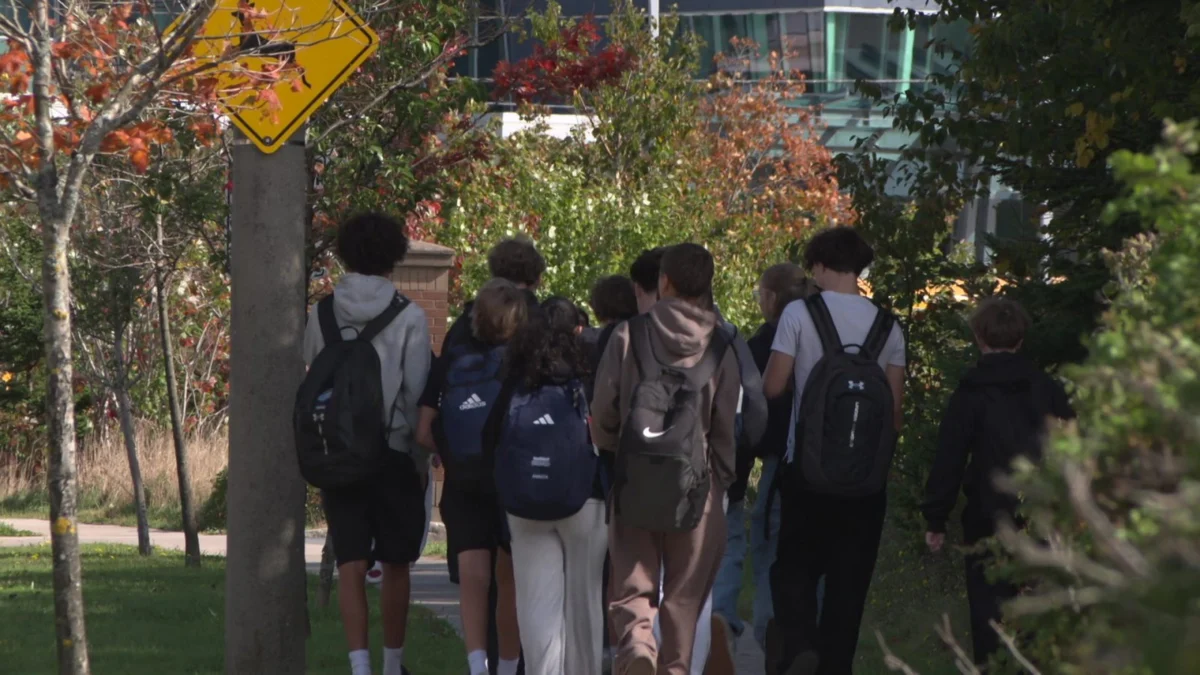
A recent security scare at Halifax West High School, which saw the institution placed under a stringent lockdown following a threatening call, has been officially deemed a hoax, with police confirming the call originated from outside Canada. This incident, occurring on Thursday, November 21, 2024, at approximately 12:30 p.m., not only triggered an immediate and extensive response from Halifax Regional Police but also highlighted the growing challenge posed by malicious false alarms, often referred to as "swatting" incidents, which divert critical resources and instill widespread fear within communities.
Detailed Chronology of the Halifax West Incident
The events unfolded rapidly on Thursday afternoon. At around 12:30 p.m., administrators at Halifax West High School received a disturbing call from a male caller who claimed to be on school property and armed with a weapon. The gravity of the threat prompted an immediate and decisive response: the school swiftly initiated its lockdown protocol, a critical safety measure designed to secure the building and protect students and staff from an imminent threat.
Halifax Regional Police (HRP) officers converged on the school, establishing a perimeter and commencing a systematic sweep of the premises. Const. Martin Cromwell of the HRP detailed the comprehensive nature of the police response, explaining, "[Officers] systematically cleared the school to determine if there’s any threats on the premises. Any students and staff that were not present on site at the time were directed to a different location, a safe and secure location." This protocol ensured that every area of the vast school facility was meticulously searched, while also accounting for the safety of individuals who might have been off-site for lunch or other reasons.
The atmosphere outside the school was one of palpable tension and confusion. Dylan Bugdal, a Grade 12 student, recounted his experience of returning from lunch to find the school surrounded by emergency vehicles. "There’s police cars everywhere and people are coming up to me like ‘You can’t go back to the school, they’re all in lockdown, there’s a threat in the school,’" Bugdal told Global News. He described the rapid spread of rumors among students and parents, reflecting the fear and uncertainty that gripped the community. "Lots of rumours of whatever it is," he added, noting that such an event was unprecedented in his three years at Halifax West, leaving him feeling "spooked" and witnessing widespread panic.
For several hours, the school remained in lockdown as police diligently conducted their search. It wasn’t until 3:45 p.m. that the all-clear was given, and the lockdown was officially lifted. Police confirmed that despite the thorough search, no evidence was found to corroborate the caller’s claims of a weapon or an armed individual on school grounds. The relief was immediate, but the lingering questions about the origin and motive behind such a disruptive event remained.
International Dimensions of the Hoax
The investigation quickly took an international turn. In an update provided on Friday, Halifax Regional Police revealed that they had traced the origin of the threatening call to outside of Canada. Specifically, law enforcement agencies were working in collaboration with counterparts in Florida, suggesting a complex cross-jurisdictional investigation. Const. Cromwell underscored the commitment of the police to pursue all available avenues, stating, "In any investigation, we look at all leads and investigate any and all leads that are available. That could include tracking a number. Any leads that we have are going to be investigated." This collaboration highlights the increasing challenges posed by cyber-enabled crimes and malicious hoaxes that exploit global communication networks, making their perpetrators difficult to apprehend.
Lindsey Bunin, a spokesperson for the Halifax Regional Centre for Education (HRCE), reiterated the district’s commitment to student and staff safety, emphasizing close cooperation with law enforcement. "The safety of our students and staff is always our top priority," Bunin stated in an email to Global News. "We follow the direction of police and take precautionary measures to help keep students and staff safe while minimizing disruption to learning whenever possible." As of the latest update, no charges have been laid in connection with the Halifax West incident, but the investigation remains active and ongoing.

Concurrent Incidents in Lower Sackville
Compounding the anxieties of the day, a separate but related series of incidents unfolded in nearby Lower Sackville on the same Thursday morning. Leslie Thomas Junior High and Sackville High School were placed under a "hold and secure" protocol after reports surfaced of a man chasing a student with a knife. This distinct situation prompted an immediate response from the RCMP, who attempted to locate the reported individual.
Unlike the Halifax West incident, the Lower Sackville events involved a perceived external threat in the vicinity of the schools rather than a direct threat inside the buildings. Following an initial investigation, RCMP officers determined that the report of a man chasing students with a knife was unsubstantiated. The hold and secure protocols at both schools were lifted around 12:45 p.m., roughly coinciding with the commencement of the Halifax West lockdown. Despite the all-clear for the schools, RCMP efforts to locate the reported man continue, and their investigation remains active. These two distinct incidents, occurring on the same day, underscore the heightened state of alert within school communities and the vigilance required from emergency services.
Understanding School Safety Protocols: Lockdown vs. Hold and Secure
The incidents at Halifax West and in Lower Sackville highlight the critical distinction between two primary school safety protocols: "hold and secure" and "lockdown." These terms, while often used interchangeably by the public, represent different levels of threat and require distinct responses from school staff and students.
Hold and Secure: This protocol is typically implemented when there is a potential threat in the general vicinity of a school, but not directly on or very close to school property. Examples might include a crime in progress nearby, a police pursuit in the neighbourhood, or a search operation. During a hold and secure, the school’s outer doors are immediately locked, securing the perimeter. However, classes and internal school activities generally continue as normal. Students are considered safe as long as they remain inside the building and do not venture outdoors. The primary goal is to prevent an external threat from entering the school while maintaining a semblance of normalcy within. Communication during a hold and secure often focuses on informing parents about the external situation and reassuring them that students are safe inside.
Lockdown: A lockdown is a far more serious and stringent measure, initiated when a direct and immediate threat is believed to be near or inside the school building itself. This could involve an active shooter, an intruder with a weapon, or, as in the Halifax West case, a credible threat of such a situation. During a lockdown, the objective is to minimize access and visibility throughout the entire building. All outer doors are locked, and inner classroom doors are also locked where possible. Students and staff are directed to remain in classrooms or designated secure areas, away from windows and doors. Lights are turned off, curtains or blinds are closed, and all windows are covered to obscure visibility into classrooms from outside. Cellphone use is typically restricted to prevent inadvertent communication that might compromise safety, and school phones are not answered to keep lines open for emergency services. Only emergency services personnel are permitted to enter or exit the building, with staff members often designated to prevent unauthorized movement. School principals typically have the discretion to declare a lockdown, though it is often done in close consultation with or on the advice of police, ensuring a coordinated response.
Both protocols are regularly practiced through drills in Canadian schools, preparing students and staff for these high-stress situations. The effectiveness of these measures relies heavily on clear communication, rapid response, and the calm execution of established procedures.
The Alarming Rise of Hoax Threats and "Swatting"
The incident at Halifax West High School is not an isolated event but rather part of a disturbing national and international trend of "swatting" incidents targeting schools. Swatting refers to the act of making a false report to emergency services to provoke a large police or SWAT team response to a particular address. While sometimes motivated by personal vendettas, these hoaxes are increasingly perpetrated by individuals or groups from remote locations, often using anonymizing technologies, making them difficult to trace.
These incidents pose significant challenges to law enforcement and school communities. Each swatting call triggers a full-scale emergency response, involving multiple police units, tactical teams, paramedics, and fire services. This deployment diverts critical resources from genuine emergencies, potentially endangering lives elsewhere. In the Halifax West case, the deployment of numerous HRP officers to systematically clear the school consumed hours of police time and taxpayer money, all for a fabricated threat.

Beyond the immediate financial and logistical strain, the psychological impact on students, staff, and parents is profound. Experiencing a school lockdown, even if it turns out to be a hoax, can be deeply traumatic. Students may suffer from heightened anxiety, fear, and a diminished sense of security in what should be a safe learning environment. Parents endure agonizing hours of uncertainty, waiting for news about their children. Educators, already managing complex responsibilities, are placed in positions of extreme stress, tasked with protecting their students during chaotic and frightening events. These repeated incidents erode trust and create a climate of fear that undermines the educational mission.
Inter-Agency Cooperation and Legal Implications of False Alarms
The international dimension of the Halifax West hoax underscores the complexities of prosecuting such crimes. Tracing the origin of a call made from outside national borders requires sophisticated cyber-forensics and robust collaboration between international law enforcement agencies. The involvement of Florida law enforcement suggests the caller may have used Voice over Internet Protocol (VoIP) services, spoofed phone numbers, or other digital means to mask their true location, making the investigative process protracted and challenging.
Despite these hurdles, authorities take these hoaxes very seriously. Individuals found responsible for making false threats can face severe legal consequences, both nationally and internationally. Potential charges in Canada could include public mischief, uttering threats, or misuse of 911/emergency services. Penalties can range from significant fines to lengthy prison sentences, depending on the jurisdiction and the severity of the disruption caused. In the United States, federal charges related to swatting carry equally harsh penalties. The determination to collaborate across borders reflects a collective understanding among law enforcement agencies that these acts are not harmless pranks but serious criminal offenses that jeopardize public safety and waste vital resources.
Broader Impact and the Path Forward
The Halifax West incident, alongside the Lower Sackville events, serves as a stark reminder of the persistent threats to school safety, whether real or fabricated. These occurrences necessitate ongoing vigilance, continuous refinement of safety protocols, and robust support systems for affected communities.
School districts like the HRCE are continuously working to enhance security measures, from physical infrastructure improvements to advanced communication systems that can rapidly alert parents and emergency services. Training for staff and students in emergency protocols is paramount, ensuring that everyone knows how to react calmly and effectively when a crisis arises. Post-incident support, including counselling services, is crucial for helping students and staff process the trauma and regain a sense of normalcy.
Ultimately, combating the rise of hoax threats requires a multi-pronged approach: aggressive investigation and prosecution of perpetrators, public awareness campaigns about the severe consequences of such actions, and ongoing investment in technologies that can help trace and prevent these malicious calls. The Halifax West High School incident, though a hoax, served as a potent test of emergency response systems and a sobering illustration of the ongoing challenges in maintaining secure and peaceful learning environments in an increasingly interconnected and vulnerable world. The ongoing investigation promises to shed further light on the mechanisms behind such international hoaxes and hopefully lead to accountability for those who sow fear and disrupt communities from afar.