admin
admin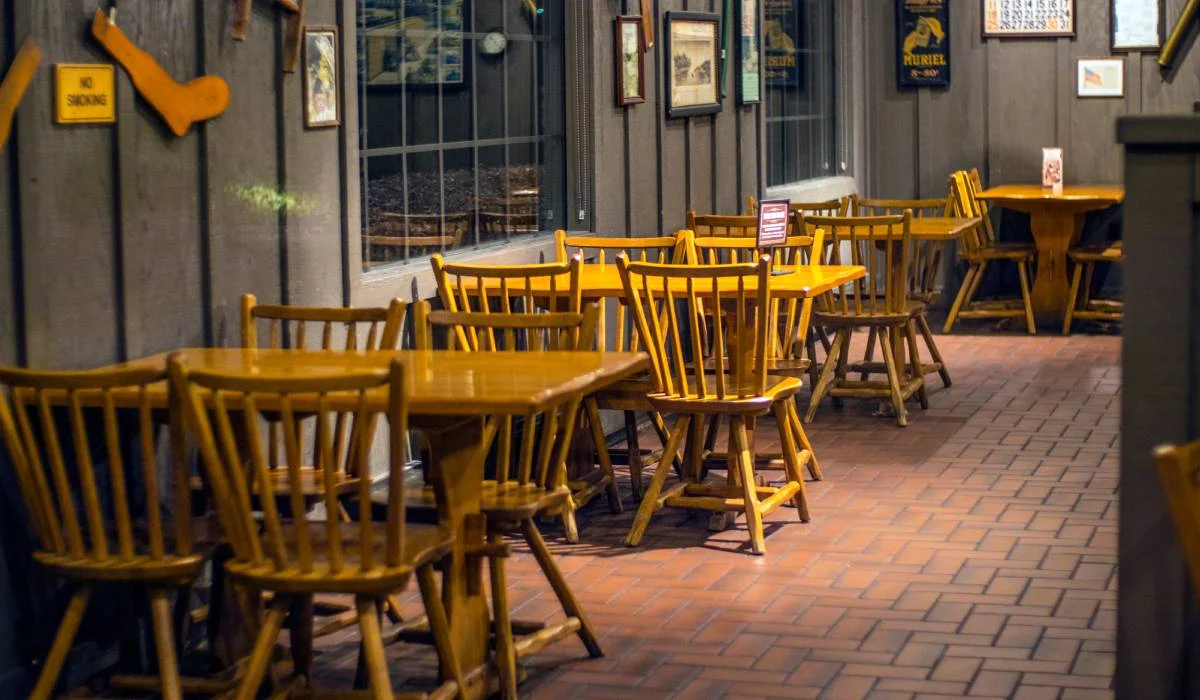
On July 14, Toast on Lenox, a prominent brunch destination in Atlanta’s Buckhead neighborhood, became the focal point of an intense social media controversy that threatened the foundation of the business. The catalyst for the crisis was not a violation of health codes, a decline in service quality, or a failure in culinary execution. Instead, the firestorm originated from a single photograph: co-owner Tamara Young posed for a picture with a guest who was a candidate for the Georgia gubernatorial office. After the candidate posted the image to his social media channels with a message of gratitude for the restaurant’s hospitality, the establishment’s digital presence was immediately overwhelmed by calls for boycotts and accusations of a political endorsement.
The incident at Toast on Lenox is emblematic of a growing trend within the hospitality sector where external digital factors, often beyond the control of business owners, escalate into existential threats. For several days, the management team was forced to divert resources away from daily operations to manage a public relations crisis, issuing clarifying statements to affirm that the photograph represented a routine act of hospitality rather than a partisan political stance. This phenomenon, characterized by the rapid escalation of online outrage, has affected a wide range of enterprises, from small local eateries to multinational corporations like Cracker Barrel and Starbucks.
The Mechanics of Digital Contagion and the Erosion of Human Judgment
The shift in how information is disseminated has fundamentally altered the "rules" of public engagement for the restaurant industry. Historically, community networks operated on a system of "centrality" and "reputation taxes." In physical social networks—neighborhoods, regular guest circles, or professional associations—individuals who shared information were held accountable for its accuracy. If a person provided a false rumor or a poor recommendation, they suffered a loss of social status or credibility. This inherent cost functioned as a "bouncer" for the network, filtering out fringe theories and unsubstantiated claims.
In the contemporary digital landscape, this reputational safeguard has been largely replaced by recommendation algorithms. Unlike human intermediaries, these algorithms do not incur a cost for amplifying false or inflammatory content. Their primary objective is to maximize user engagement to drive advertising revenue. Because outrage and emotional triggers are the most effective drivers of "scrolling" behavior, platforms are incentivized to surface content that provokes a strong reaction.
The algorithmic infrastructure is inherently indifferent to the sentiment of engagement. Whether a user is defending a business or attacking it, the system interprets the interaction as a signal of high-value content. Consequently, defensive comments from loyal patrons can inadvertently broaden the reach of a negative post, signaling to the algorithm that the controversy is "trending" and should be shown to a wider audience. This creates a feedback loop where the more a business tries to correct the record online, the more the platform facilitates the spread of the original grievance.
Chronology of Recent Industry Disruptions
The incident at Toast on Lenox is part of a broader timeline of events where digital sentiment has decoupled from operational reality. In recent years, several high-profile cases have illustrated the volatility of the modern market:
- The Starbucks Korea Cultural Misunderstanding: In a series of viral posts, localized marketing efforts were misinterpreted by global audiences, leading to widespread calls for boycotts before the regional context could be explained.
- The 2024 Fast-Food Price Volatility: Regional price adjustments by various franchises triggered national boycotts on platforms like TikTok. The speed of the spread often outpaced the ability of corporate communications teams to explain the economic drivers behind the hikes, such as rising labor costs and supply chain inflation.
- The Cracker Barrel Logo Controversy (2025): Perhaps the most significant example of synthetic outrage, Cracker Barrel faced a massive backlash over a perceived rebranding effort. Analysts later discovered that nearly 50% of the engagement driving the boycott originated from automated bot accounts. Despite the lack of an actual customer-led movement, the perceived outrage contributed to a 14% drop in the company’s stock price over a 48-hour period, leading to internal restructuring and job losses within the design and marketing departments.
Data-Driven Analysis of Online Sentiment vs. Real-World Impact
The disconnect between online engagement and actual consumer behavior is a critical area of concern for hospitality analysts. While a social media firestorm can appear overwhelming, it often does not reflect the sentiments of the restaurant’s actual customer base. However, the financial implications are real. In the case of publicly traded companies like Cracker Barrel, the "reputational hit" is quantified by market capitalization loss, even if foot traffic in physical locations remains steady.
Research into social media dynamics suggests that "fringe voices"—individuals with extreme views that would typically be marginalized in face-to-face interactions—are granted equal weight by algorithms. Because these platforms prioritize engagement velocity over veracity, a handful of accounts can generate the appearance of a consensus. For a 30-seat brunch spot or a local café, this "megaphoning" effect can be devastating, as it targets the local community’s perception before the owner can respond.
Furthermore, the role of "synthetic engagement" or bots cannot be understated. Professional services now exist that can manufacture outrage for political or competitive reasons. When nearly half of a controversy is driven by non-human actors, the "market referendum" being conducted online is essentially a fabricated crisis. Yet, the pressure on executives to react—often by firing staff or issuing public apologies—remains high due to the perceived risk of silence.
Strategic Frameworks for Navigating Algorithmic Crises
Industry experts and advisors, including private equity operating advisor JD Miller, suggest that restaurant operators must adopt a new set of protocols to survive these digital shifts. The goal is to move from a reactive posture to a structured, defensive strategy that prioritizes human relationships over digital metrics.
Verification of Source Credibility
Operators are encouraged to scrutinize the origin of any burgeoning online controversy. The primary question must be: "Who is vouching for this story?" If the criticism is not coming from a verifiable customer with a history at the establishment, it should be treated with skepticism. Distinguishing between a legitimate grievance from a regular patron and a viral post from an anonymous source is the first step in determining the scale of the response.
Avoiding the "Engagement Trap"
One of the most difficult lessons for modern operators is that direct engagement on social media platforms often exacerbates the problem. By replying to inflammatory comments, the business provides the algorithm with more data points to keep the thread active. A more effective strategy is to move the conversation to channels that the business controls, such as direct email newsletters to loyal guests, official press releases to local media, or face-to-face interactions within the restaurant.
Establishing a Board of Advocates
Successful navigation of reputational crises often involves a pre-established "Board of Advocates." This group typically consists of a general manager, an operating partner, and occasionally outside legal or PR counsel. The purpose of this group is to provide a "cooling-off" period. Before any public statement is released, the board reviews the situation to ensure the response is not driven by the immediate emotional stress of the management team.
Development of a Reference Bank
A proactive measure for any hospitality business is the creation of a "Reference Bank." This is an internal list of 5 to 10 long-term regulars, community leaders, and suppliers who have a deep understanding of the restaurant’s character. In the event of a localized controversy, these individuals can serve as third-party ambassadors. Their authentic, real-world experiences provide a necessary counter-narrative to the noise generated by anonymous online accounts.
Broader Implications for the Future of Hospitality
The crisis at Toast on Lenox and the subsequent boycotts across the industry highlight a fundamental tension between the values of hospitality and the mechanics of the digital age. Hospitality is built on the principles of nuance, personal attention, and the human touch. In contrast, social media algorithms are built on binary reactions, speed, and mass amplification.
The industry is currently grappling with the reality that "online reputation" is no longer a direct reflection of "offline service." As algorithms continue to prioritize conflict over community, the burden of proof has shifted to the business owner. The survival of independent and corporate restaurants alike may depend on their ability to de-emphasize digital metrics in favor of strengthening local, physical ties.
The ultimate antidote to algorithmic outrage remains the core mission of the industry: high-quality service and genuine human connection. While the "feed" may turn against an establishment for reasons beyond its control, the long-term health of a business is still rooted in the reputation it builds with the people who actually walk through its doors. Protecting that reputation requires a sophisticated understanding of digital dynamics, a refusal to be baited by synthetic outrage, and a commitment to the "ordinary hospitality" that defined the industry long before the advent of the algorithm.