admin
admin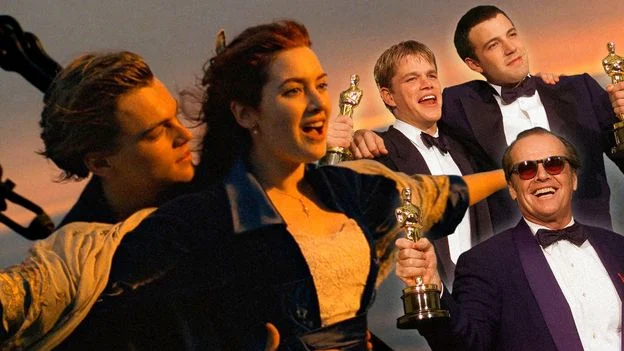
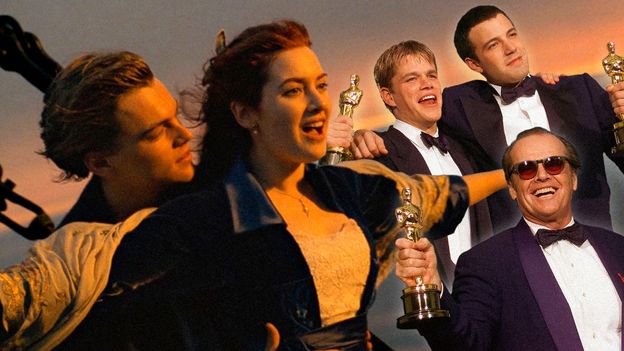
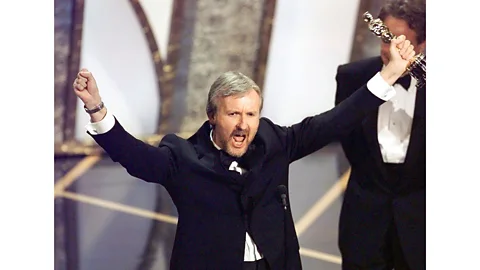
The 70th Academy Awards, held on March 23, 1998, remains etched in television history as the definitive high-water mark for Hollywood’s most prestigious ceremony. Presided over by host Billy Crystal, the event was a sprawling, nearly four-hour celebration of cinematic excess that culminated in James Cameron’s Titanic securing a record-tying 11 Oscars. For the American public, it was more than an awards show; it was a cultural phenomenon that commanded a staggering 57 million viewers on ABC. To put that figure into perspective, it exceeded the viewership of the 2004 series finale of the hit sitcom Friends by more than 4.5 million people. Yet, in the quarter-century since Cameron declared himself "king of the world" from the Shrine Auditorium stage, the Academy Awards have faced a precipitous and seemingly irreversible decline in domestic viewership, raising fundamental questions about the relevance of the Oscars in a fragmented digital age.
The 1998 ceremony was characterized by a level of spectacle that modern producers struggle to replicate. One of the night’s most surreal highlights involved the appearance of Bart the Bear, a 1,500-pound Kodiak who stood nearly 10 feet tall. Bart, a seasoned "animal actor" with credits in Legends of the Fall and The Edge, appeared alongside presenter Mike Myers to deliver the envelope for Best Sound Effects Editing. The moment was quintessential 1990s Hollywood: a mix of high-concept staging, genuine celebrity star power, and a sense of unpredictability. The evening also featured a "family album" segment, where dozens of past Oscar winners—ranging from Dustin Hoffman to Anne Bancroft—sat together for a historic photograph, reinforcing the Academy’s role as the custodian of American mythology.
The Statistical Collapse of a Television Giant
The decline in Oscar viewership is not merely a recent trend but a steady erosion that has accelerated over the last decade. Following the 1998 peak, the ceremony maintained a relatively healthy audience through the early 2000s, generally hovering between 30 million and 45 million viewers. However, the 2010s signaled the beginning of a sharper downturn. By 2018, the audience had slipped to 27 million. In 2020, just before the global pandemic shuttered theaters, the figure fell to 24 million.
The 2021 ceremony, heavily impacted by COVID-19 restrictions and a lack of traditional blockbuster nominees, marked a historic nadir with only 10.4 million viewers. While the 2024 ceremony saw a slight recovery to approximately 20 million viewers, the current audience remains roughly one-third of what it was during the Titanic era. Industry analysts point to a confluence of factors for this decline, including the rise of streaming services, the death of "appointment television," and a growing disconnect between the films the Academy honors and the films the general public actually watches.
The Convergence of Popularity and Prestige
To understand why the 1998 Oscars were so successful, one must look at the financial profile of the nominees. Titanic was not just a critical darling; it was a global juggernaut. It was the first film to gross $1 billion at the box office and remained the highest-grossing film of all time for over a decade. When a film of that magnitude is nominated for 14 awards, the public has a vested interest in the outcome. As film historian Tim Robey notes, the 1998 ceremony functioned as a "victory lap" for a movie that millions of people had seen multiple times in theaters.
Historically, the Academy’s tastes and the public’s tastes were closely aligned. Between 1927 and 1976, approximately 90% of Best Picture winners were among the top 10 highest-grossing films of their respective years. Classics such as Gone with the Wind, Ben-Hur, The Sound of Music, and The Godfather were simultaneously massive commercial hits and Academy favorites. This alignment ensured that the Oscars remained a "big tent" event where the average moviegoer felt represented.
The 1980s and 1990s continued this trend to a significant degree. In 1990, Dances with Wolves earned $424 million globally (roughly $1 billion in today’s currency). In 1994, Forrest Gump brought in $678 million. Because these films were part of the national conversation, the awards ceremony served as the final chapter of a story the public had been following all year.
The Great Bifurcation: Prestige vs. Blockbusters
The turning point in the relationship between the Oscars and the box office is often traced back to the late 1970s and early 1980s, the era that saw the birth of the "summer blockbuster" with Jaws and Star Wars. While Star Wars was a Best Picture nominee in 1978, it lost to Woody Allen’s Annie Hall, a much smaller, more intellectual film. This marked the beginning of what Michael Schulman, author of Oscar Wars, describes as a "bifurcation" in the industry.
By the 2000s, this split had widened into a chasm. The film industry became increasingly dominated by franchise-driven intellectual property—superheroes, sequels, and remakes—while the Academy began to favor smaller, independent "prestige" dramas. The statistical evidence of this shift is stark. In the 1990s, the combined global box office for all Best Picture winners was nearly $5 billion. In the 2010s, that figure plummeted to just $2 billion.
The 2010 ceremony provided a clear illustration of this tension. The race for Best Picture pitted James Cameron’s Avatar, a technical marvel and box-office titan with a $237 million budget, against Kathryn Bigelow’s The Hurt Locker, a gritty Iraq War drama made for just $15 million. When The Hurt Locker won, it sent a clear signal that the Academy was prioritizing artistic merit and directorial vision over commercial impact. While critics praised the decision, the mainstream audience began to drift away, feeling that the Oscars were no longer "for them."
This trend has only intensified. The 2024 Best Picture winner, Anora, was produced on a modest $6 million budget and earned $58 million globally—a respectable return for an indie film, but a far cry from the cultural footprint of a film like Titanic or even Gladiator.
Technological Disruption and the Death of Appointment TV
Beyond the content of the films, the way audiences consume media has fundamentally changed. In 1998, the Oscars were one of the few ways to see major Hollywood stars in an "unscripted" setting. Today, fans have 24/7 access to celebrities via Instagram, TikTok, and X (formerly Twitter). The "mystique" of the movie star has been diluted by constant digital availability.
Furthermore, the rise of streaming platforms like Netflix, Apple TV+, and Amazon Prime has ended the era of "appointment viewing." Viewers are no longer accustomed to sitting through a four-hour live broadcast punctuated by commercial breaks. The most viral moments of the Oscars—be it a wardrobe malfunction, a controversial joke, or a physical altercation like the 2022 Will Smith incident—are instantly clipped and shared on social media. Many younger viewers feel they can "watch" the Oscars by simply scrolling through their social feeds the following morning, making the live broadcast redundant.
Industry Responses and the Search for Relevance
The Academy of Motion Picture Arts and Sciences (AMPAS) has not been blind to these challenges. In 2009, following the public outcry over the snubbing of Christopher Nolan’s The Dark Knight in the Best Picture category, the Academy expanded the number of nominees from five to ten. The goal was to include more popular films in the top category to entice viewers.
In 2018, the Academy went a step further, proposing a "Best Popular Film" category. However, the proposal was met with fierce backlash from critics and members who argued it would "cheapen" the Oscars and create a "separate but equal" tier for blockbusters. The idea was ultimately shelved.
There are also ongoing debates regarding the "naffness" or tone of the ceremony itself. Film journalist Stephanie Bunbury notes that the event often struggles to find a balance between being a serious industry awards show and an entertaining variety program. Lengthy acceptance speeches for technical categories, while important to the industry, are often cited by casual viewers as reasons for tuning out.
Future Implications: Can the Oscars Recover?
The future of the Academy Awards depends on whether the organization can bridge the gap between the "prestige" cinema it values and the "popcorn" cinema that sustains the industry. The 2023 success of Oppenheimer—a Best Picture winner that also grossed nearly $1 billion—offered a glimmer of hope that the two worlds can still coexist. When a film manages to be both a critical masterpiece and a commercial hit, viewership tends to stabilize.
However, the structural changes in the media landscape are permanent. The Oscars are unlikely to ever see 57 million viewers again, simply because the monoculture that existed in 1998 has vanished. In a world of infinite choice, no single television event—save for perhaps the Super Bowl—can command the undivided attention of the nation.
As the Academy moves forward, the challenge will be to redefine what success looks like. If the Oscars can no longer be a mass-market ratings juggernaut, they may have to settle for being a high-end niche event that celebrates the craft of filmmaking for a smaller, more dedicated audience. Whether Hollywood’s biggest players are willing to accept that diminished stature remains to be seen. For now, the 1998 ceremony stands as a monument to a vanished era: a time when the biggest movie in the world was also the best movie in the room, and everyone at home was watching.