admin
admin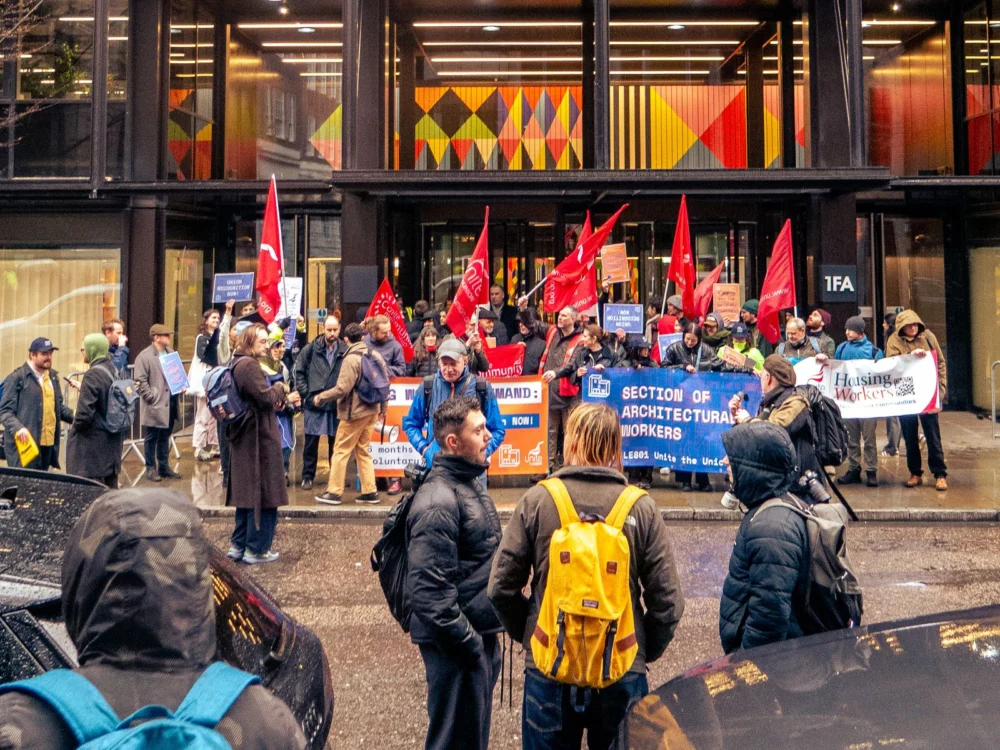
The year 2025 proved to be a particularly challenging period for the architectural profession, marked by a confluence of economic downturns, significant policy shifts, and a palpable increase in worker precarity. Billing continued its downward trajectory throughout the year, signalling a broader contraction in the design and construction sectors. Compounding these financial pressures, a controversial decision in the penultimate month of 2025 saw the Trump administration "deprofessionalize" architecture, a move with potentially far-reaching negative implications for higher education funding, professional licensure, and the overall standing of architects within the broader economy.
This sustained period of economic contraction and diminished professional recognition has intensified existing stresses within architectural firms. As business activity slowed, a concerning trend emerged: firm leaders increasingly resorted to reducing their workforce and overloading remaining employees in attempts to cut costs and maintain competitiveness. This practice, while aimed at short-term survival, has exacerbated long-standing issues of burnout, low wages, and a perceived lack of appreciation for the creative labor that underpins the industry.
However, against this backdrop of gloom, the early months of 2026 have brought two significant developments that offer a glimmer of hope for architectural workers. Across the Atlantic in the United Kingdom and domestically in the United States, architectural professionals have begun to organize, stand in solidarity, and even secure notable wins in their pursuit of improved working conditions and professional dignity. These recent battles are not isolated incidents but rather expose fundamental tensions inherent in building a business reliant on highly skilled, creative minds. As the industry faces immense pressure to innovate or risk obsolescence, a growing chorus of junior staff and union advocates are urging firm leaders to recognize that valuing their humanity, fair compensation, and job security is not a liability, but rather an essential asset in fostering cutting-edge design and a resilient practice. Firm leaders, therefore, would be wise to take heed of these burgeoning movements, as they represent a potential paradigm shift in the future of architectural practice.
The Economic Squeeze and Political Undermining of 2025
The economic landscape of 2025 presented significant headwinds for the architecture industry. The Architecture Billings Index (ABI), a leading indicator of future nonresidential construction spending, consistently remained below the critical threshold of 50, signalling a sustained contraction in demand for architectural services. This trend, as reported by the American Institute of Architects (AIA), reflected broader economic uncertainties, including fluctuating interest rates, supply chain disruptions, and a general tightening of capital in real estate development. Firms, particularly those heavily reliant on commercial and institutional projects, experienced reduced project pipelines and increased competition, forcing many to re-evaluate their operational structures.
Further complicating the professional environment was the Trump administration’s "deprofessionalization" of architecture in November 2025. While the full scope and long-term consequences of this policy change are still being assessed, initial analyses suggested it could significantly impact the funding mechanisms for architectural education programs. Beyond higher education, critics warned that such a reclassification might erode the public perception of architecture as a specialized, licensed profession, potentially weakening regulatory frameworks, devaluing the architect’s expertise, and opening the door to less rigorous standards in design and construction. This move was widely seen by professional bodies and many practitioners as a direct attack on the integrity and established standards of the profession, adding another layer of anxiety to an already challenging year. The combination of dwindling financial prospects and a perceived political undermining of their professional status created fertile ground for discontent among architectural workers.
The UK Front: Bjarke Ingels Group (BIG) Faces Worker Protest in London
The culmination of these industry-wide stresses manifested dramatically in London in early 2026, when workers at the acclaimed Bjarke Ingels Group (BIG) took to the streets in protest. The demonstration, widely reported by The Architect’s Newspaper and Dezeen, followed BIG’s decision to lay off more than 70 employees from its London office. These redundancies were primarily attributed to the cancellation of a major, previously unannounced project in Saudi Arabia.
Chronology of Events:
- Late 2025: BIG’s London office announces "mass redundancies," affecting over 70 workers. The firm attributes these cuts to a significant project cancellation.
- Early 2026: Reports surface, notably from Dezeen, identifying the cancelled project as being located in Saudi Arabia. Speculation, including reports from Architects’ Journal, suggests it is one of many projects within Crown Prince Mohammed bin Salman’s ambitious Vision 2030 initiative, which have either been cancelled or significantly scaled back, such as components of "The Line."
- Past Week (February 2026): Workers, many of whom are members of the Section of Architectural Workers (SAW) Union, stage a protest in rainy London, demanding better treatment for those laid off and formal recognition for their union.
The protest highlighted several critical issues. A significant portion – more than half – of BIG’s London staff are members of SAW, an emerging union dedicated to advocating for architectural employees. While SAW has been actively organizing, it awaits formal recognition from BIG management, a step that would grant it greater bargaining power.
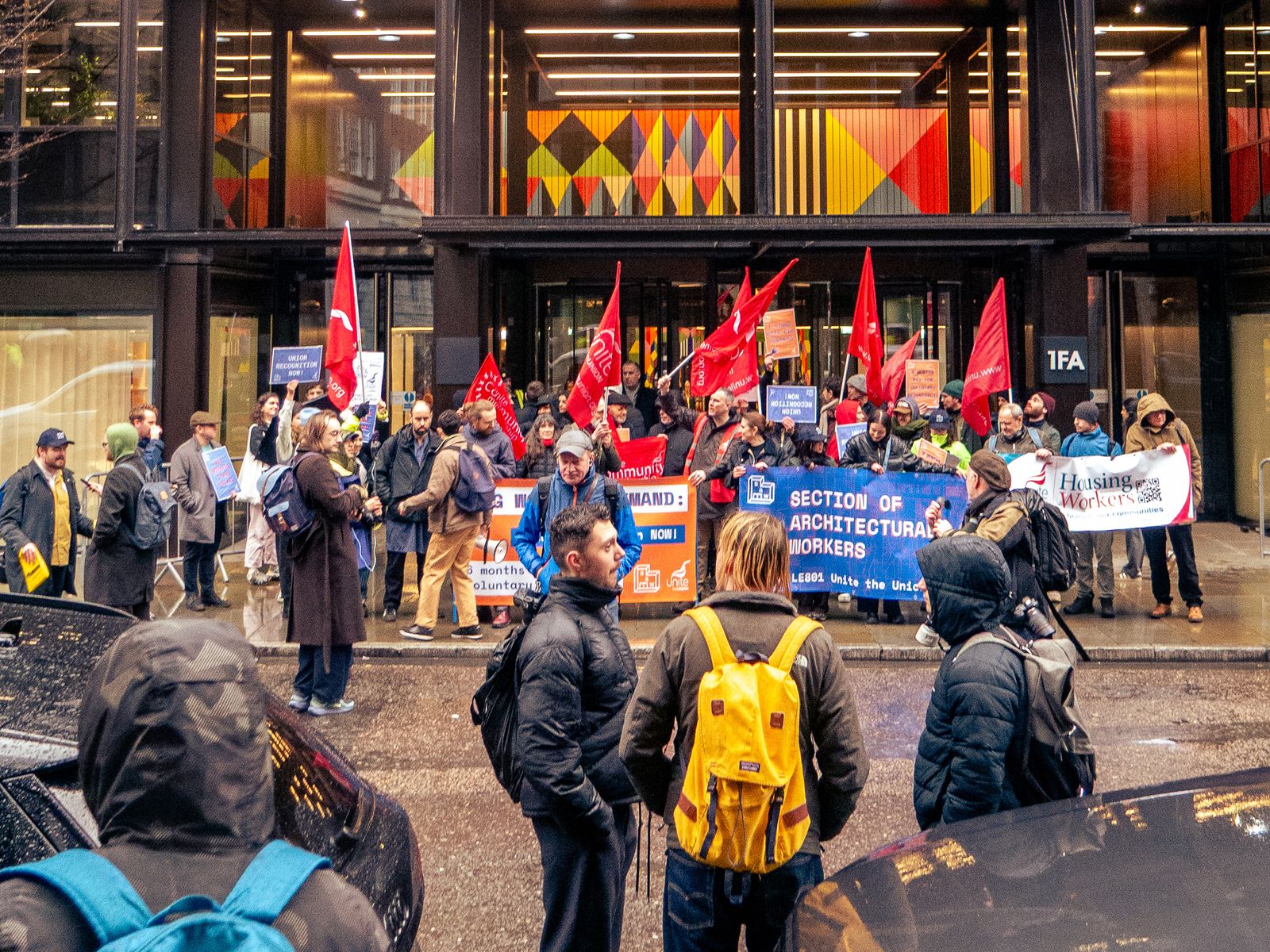
Central to the workers’ grievances were the terms of the redundancies and an alleged disparity in the firm’s financial decisions. Union representatives pointed to reports of a recent $10.2 million payout to shareholders, a sum that a BIG representative later called "false" without providing alternative figures or explanations. Workers questioned how such a payout could occur simultaneously with mass layoffs, arguing that the firm was prioritizing shareholder returns over employee welfare.
SAW’s demands were clear and specific:
- Six months of severance pay for all employees who lost their positions, far exceeding statutory minimums.
- Formal recognition of the Section of Architectural Workers Union by BIG management.
- Fair redundancy terms for workers who relocated to London on skilled visas. This last demand is particularly poignant, as many international designers rely on their employment for visa sponsorship, and job loss can force them to rapidly relocate or return to their home countries, incurring significant personal and financial hardship.
The protest at BIG underscores a growing trend of labor activism in a sector historically resistant to unionization. It serves as a stark reminder that even high-profile, globally recognized firms are not immune to the pressures of economic volatility and the rising expectations of their workforce for fair treatment and transparency.
The US Front: Snøhetta’s Anti-Union Tactics and the NLRB Ruling
Concurrently, across the Atlantic, another major architectural practice, Snøhetta, found itself in the spotlight for its past anti-union actions. The firm’s New York office was the subject of a significant ruling by the National Labor Relations Board (NLRB) in early 2026, which affirmed allegations of unfair labor practices during a unionization attempt three years prior.
Chronology of Events:
- Three Years Ago (Early 2023): Workers at Snøhetta’s New York office embark on a unionization drive. Following a tumultuous organizing period, the employees ultimately lose their union vote. Subsequently, eight employees are terminated.
- Post-Vote (2023): The terminated employees file a complaint with the NLRB, alleging that their dismissals were discriminatory and a direct consequence of their union organizing activities. They contend that Snøhetta engaged in tactics designed to suppress the unionization effort.
- Earlier This Month (January 2026): The NLRB affirms the belief that Snøhetta engaged in illegal anti-union conduct. As reported by The New York Times and The Architect’s Newspaper, the federal board accused Snøhetta’s leadership of discouraging employees from engaging in protected unionizing activity and "interrogating employees about their union sympathies or activities," which are violations of the National Labor Relations Act.
The NLRB’s ruling is a significant victory for labor advocates in architecture. It not only vindicates the terminated workers but also sends a clear message to firms about the legal boundaries of employer conduct during union drives. The board’s findings highlight the importance of employees’ rights to organize and engage in collective bargaining without fear of reprisal.
Perhaps most damaging to Snøhetta’s reputation were the internal communications revealed during the NLRB proceedings. Hell Gate reported on damning emails exchanged between Snøhetta’s leadership, which exposed a deep-seated disdain for the unionizing efforts. In one particularly egregious instance, a director reportedly compared the unionizing drive to the "‘conditioned-reflex therapy’ scene at the end of A Clockwork Orange," a disturbing analogy suggesting a desire to re-educate or coerce employees. This same director further disparaged unionizing employees, lamenting, "I’m astonished by the diversity of detachments from reality the iPhone generation has gleaned from the recently digitized, remote industrial manufacturing of reality our erstwhile art has, at scale, become."
This statement, dense and convoluted as it is, speaks volumes. It reveals a management perspective that struggles to reconcile the perceived artistic integrity of architecture with the demands of modern production and, crucially, with the legitimate concerns of its workforce. The director’s lament about "rapid production" and the "digitized, remote industrial manufacturing of reality" ironically precedes a dismissal of the "iPhone generation" seeking better conditions, suggesting a profound disconnect between leadership’s anxieties about the state of their "art" and their employees’ efforts to address the very real human costs of those industry demands. Such internal communications, made public by a federal agency, represent a significant blow to the firm’s image and its claims of fostering a progressive, creative environment.
Leadership Perspectives and the AI Conundrum
The tensions laid bare by these labor disputes are further complicated by the ongoing technological revolution, particularly the rise of artificial intelligence (AI) in design. The comments made by Bjarke Ingels himself in 2025 illustrate this complex relationship between leadership, technology, and labor.
In a 2025 talk hosted by acoustics company Rockfon, Ingels discussed an architectural ethos that prioritizes the "humanity of an end-user" and creates designs "generous toward the city." Yet, in the same address, when asked about AI’s role, he suggested a future where "someone who graduates from architecture school today, who has a lot of will and intent, could actually have the force of 700 [designers] at his or her fingertips simply by being very good at working with AI." This vision, while potentially exciting for technological advancement, raises profound questions about the future demand for human designers and the value placed on individual contributions.
Ingels took this perspective a step further in an interview posted to Instagram by an AI-powered architecture software company a couple of months later. In a particularly telling analogy, he likened his interactions with his cadre of employees—a team that took him 25 years to meticulously build and cultivate—to simply inputting a prompt into an AI interface. This comparison, intentional or not, suggests a perception of human collaborators as interchangeable inputs, much like algorithmic instructions, rather than unique creative agents.
It is perhaps unsurprising, then, that a firm leader who publicly compares his human team to a machine learning prompt might face accusations of treating workers as "interchangeable widgets" during an economic downturn. Both Snøhetta and BIG, like many firms across the industry, are grappling with the transformative demands of new technology, the relentless pressure for rapid production, and the enduring pursuit of artistic excellence. The challenge lies in how these leaders choose to navigate these forces. Will they see technology as a tool to displace human labor and further consolidate power, or as an opportunity to augment human creativity while simultaneously investing in the well-being and dignity of their workforce?
Broader Implications and the Future of Architectural Practice
The events at BIG and Snøhetta are more than isolated incidents; they are symptomatic of deeper, systemic issues within the architectural profession. The economic pressures of 2025, coupled with the "deprofessionalization" effort, have created an environment where the perceived value of an architect’s labor is under attack from multiple fronts. In this context, the collective action seen in London and the legal victory in New York signify a growing awareness among architectural workers of their precarious position and their willingness to organize for change.
Implications for Firms:
- Reputational Damage: The public exposure of anti-union tactics and perceived hypocrisy (shareholder payouts amidst layoffs) can severely tarnish a firm’s brand, affecting its ability to attract top talent and secure future projects.
- Legal Risks: The NLRB ruling against Snøhetta sets a precedent and highlights the legal liabilities firms face when attempting to suppress unionization efforts.
- Talent Drain: A hostile or exploitative work environment, especially for a generation increasingly attuned to social justice and work-life balance, can lead to a significant loss of skilled professionals to more supportive industries or firms.
Implications for Workers and the Profession:
- Empowerment: These successes, however incremental, empower workers and demonstrate that collective action can yield tangible results, fostering a sense of agency in a profession often characterized by long hours and high stress.
- Redefining Professional Standards: The push for better compensation, job security, and union recognition challenges traditional firm structures and prompts a re-evaluation of what constitutes fair labor practices in architecture.
- The AI Debate: The discussion around AI’s role in design must now fundamentally include how it impacts the human workforce, ensuring that technological advancement does not come at the expense of human dignity and livelihood.
The path forward for the architectural profession is at a critical juncture. The prevailing model of treating salaried designers as disposable assets—akin to 1099 workers, hired and fired en masse by shortsighted leadership to maintain competitiveness—is proving unsustainable and ethically questionable. To truly dig themselves out of this hole, firms must collectively decide that intentionally recognizing the humanity of their workforce—through fair compensation, robust job security, a healthy work-life balance, and respect for collective bargaining—is not merely a moral imperative but a strategic advantage. It is this commitment to the well-being of their creative minds that will ultimately yield a thriving, innovative, and resilient architectural practice capable of navigating future tumult. The question remains whether firm leaders are prepared to take the reins of their own profession, demonstrating a genuine commitment to artistry and human value over the relentless pursuit of capital.
Top photo courtesy of SAW-Unite.