Jia Lissa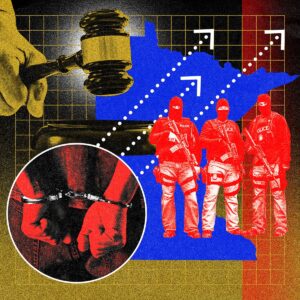
The United States federal court system is teetering on the brink of an unprecedented crisis, overwhelmed by a dramatic surge in immigration detention cases, particularly in states like Minnesota. A sweeping operation by Immigration and Customs Enforcement (ICE) has unleashed an "avalanche" of legal challenges, pushing judicial resources, federal prosecutors, and immigration attorneys past their breaking points and raising grave concerns about due process and constitutional integrity.
The Minnesota Flashpoint: Operation Metro Surge
At the epicenter of this burgeoning judicial emergency is Minnesota, where ICE’s "Operation Metro Surge," launched in December, has dramatically escalated arrests. According to the Department of Homeland Security (DHS), federal immigration agents have apprehended approximately 4,000 individuals since the operation began. This intensified enforcement has not only swelled detention populations but has also generated an extraordinary volume of habeas corpus petitions filed in the U.S. District Court in Minnesota. These petitions, legal mechanisms for individuals to challenge the legality of their detention, have reached numbers in Minnesota alone that nearly match the total filed across the entire nation during a full year under previous administrations.
The sheer scale of this legal bombardment is stark. A review of court records and official judicial statistics by WIRED indicates that the volume of habeas corpus filings in Minnesota has created an untenable situation. Immigration attorney Graham Ojala-Barbour, with over a decade of experience, vividly illustrates the daily grind: "I’ve never said the word habeas so many times in my life," he remarked, confessing that dreams of habeas petitions now haunt his sleep.
Behind the Deluge: Trump-Era Policy Shifts
The current crisis is not merely a consequence of increased arrests but stems from a confluence of two distinct Trump administration policies. Firstly, there has been a dramatic, systemic increase in the number of individuals being detained. Data from Syracuse University’s Transactional Records Access Clearinghouse (TRAC) reveals that as of January 25, over 70,000 people were in immigration detention. This figure represents a staggering increase from fewer than 15,000 detainees towards the end of the Biden administration, highlighting a fundamental shift in enforcement strategy.
Secondly, and perhaps more critically, the administration has systematically dismantled a key legal mechanism for securing the release of detainees: the bond hearing. For decades, the Immigration and Nationality Act (INA) was interpreted to allow undocumented immigrants who had resided in the U.S. for several years to be granted a bond hearing before an immigration judge. These judges would assess factors such as criminal history and flight risk to determine if release was appropriate while their cases were pending. However, the Trump administration introduced a new interpretation of the INA, effectively eliminating this right for broad categories of detainees.
Sarah Wilson, an attorney who previously served in the Justice Department’s Office of Immigration Litigation, explains the profound impact of this policy shift: "Filing a habeas petition really has become the only avenue for restoring that right to a bond hearing that had previously existed." This change has essentially forced detainees, who would once have had an administrative path to potential release, to resort to federal courts for relief, thereby creating the current backlog.
DHS spokesperson Tricia McLaughlin, in response to inquiries, affirmed the administration’s stance: "The Trump administration is more than prepared to handle the legal caseload necessary to deliver President Trump’s deportation agenda for the American people." She further asserted, "It should come as no surprise that more habeas petitions are being filed by illegal aliens—especially after many activist judges have attempted to thwart President Trump from fulfilling the American people’s mandate for mass deportations."
A System Under Strain: Exhaustion and Collapse
The human cost of this judicial overload is evident across the legal landscape. Federal prosecutors, tasked with defending the government against these petitions, are profoundly overwhelmed. Daniel Rosen, the U.S. Attorney for the District of Minnesota, articulated the dire situation in a letter to a judge, stating his office was "struggling to keep up with the immense volume" of petitions. This struggle has led to critical oversights, including at least one instance where a court order demanding the return of a petitioner was reportedly missed.
The personal toll on legal professionals is stark. Julie Le, a now-former special assistant U.S. attorney in Minnesota, embodied this exhaustion. On February 3, during a court hearing, Le reportedly pleaded with a U.S. judge to hold her in contempt, a desperate attempt to gain respite from her crushing workload. She was listed on an astonishing 88 cases, according to data from PACER, the U.S. court records database. Le was subsequently fired after the hearing, where she allegedly declared, "This job sucks." Her experience highlights not only the volume of work but also systemic issues within the government’s response. Le, who volunteered to assist with habeas petitions, described a chaotic onboarding process, lacking proper orientation and training, struggling with basic access to work tools, and even being added to cases before being admitted to practice in Minnesota. She also noted the significant difference in standards between her previous role at ICE’s Office of the Principal Legal Advisor (OPLA), where cases are considered less formal internal proceedings before immigration judges, and the rigorous evidentiary standards of federal court. She likened efforts to secure ICE compliance with court orders to "pulling teeth."
Ana Voss, the civil division chief for the Minnesota U.S. Attorney’s Office, was similarly engulfed. Before December, her case portfolio was diverse, encompassing social security and disability lawsuits. Since Operation Metro Surge, habeas petitions for immigrant detainees have overwhelmingly dominated her workload. In January, 584 of the 618 cases filed in Minnesota district court that listed Voss as an attorney were habeas petitions. Voss has also reportedly departed the Minnesota U.S. Attorney’s Office. Her automatic email reply now directs inquiries to David Fuller, who has quickly inherited a similar overwhelming caseload, with PACER data showing him listed in 183 habeas petition cases filed in February alone by February 10, double his January total.
Detainee Conditions and Due Process Concerns
While attorneys grapple with the legal onslaught, the situation for those detained by immigration authorities is even more perilous. Court filings reveal disturbing accounts from detainees. Many describe being packed into cells so full they couldn’t sit down, before being flown to detention centers, often in Texas, thousands of miles from their homes. Some reported sharing cells with individuals infected with Covid-19, while others faced relentless pressure from agents to "self-deport."
Despite these accounts, DHS spokesperson McLaughlin maintained, "All detainees are provided with proper meals, water, medical treatment, and have opportunities to communicate with their family members and lawyers. All detainees receive full due process." However, the sheer volume of cases and the logistical challenges inherent in a system under such strain raise serious questions about the practical application of these assurances. The fact that individuals remain behind bars even after judges have ordered their release underscores the systemic failures.
Broader Impact and Judicial Resistance
The crisis extends far beyond Minnesota. The number of habeas petitions has exploded nationwide. In the Western District of Texas, at least 774 petitions were filed in January, while the Middle District of Georgia saw 186 in the same month. ProPublica reported over 18,000 habeas cases filed across the country since January 2025. This contrasts sharply with previous years; the Administrative Office of the United States Courts reported only 618 habeas petitions for noncitizen detainees filed throughout the entire federal court system between April 2024 and March 2025.
The legal landscape is further complicated by conflicting judicial rulings. On February 6, the Fifth Circuit Court of Appeals, which covers Texas, Louisiana, and Mississippi, ruled in favor of the Trump administration’s new legal interpretation of the INA. This decision is particularly significant because the majority of detainees are currently held in facilities within the Fifth Circuit’s jurisdiction, potentially making it even harder for them to secure bond hearings. Ojala-Barbour noted that habeas petitions are typically filed in the district court where a detainee is located, leading to cases originally filed in Minnesota being transferred to courts in Texas following detainee movements.
However, other jurisdictions have pushed back. Hundreds of cases in other parts of the country have resulted in rulings against the government’s position. The chief judge for the Middle District of Georgia, for instance, has publicly characterized the volume of petitions as an "administrative judicial emergency," signaling the widespread recognition of the severity of the crisis.
Erosion of Due Process and Constitutional Integrity
Beyond the immediate workload, the crisis poses a fundamental threat to the integrity of the U.S. justice system. Federal attorneys are not only responsible for defending the government but also for ensuring compliance with court orders, including orders to release petitioners or return them to their home states. When, due to being overwhelmed or underprepared, attorneys fail to enforce these orders, individuals can remain unlawfully detained for extended periods.
Judge Jerry Blackwell, addressing the government’s noncompliance in five separate cases in February, underscored the gravity of the situation: "When court orders are not followed, it’s not just the Court’s authority that’s at issue. It is the rights of individuals in custody and the integrity of the constitutional system itself." His words serve as a stark reminder of the foundational principles at stake. The systematic breakdown in the ability to process these cases and enforce judicial directives suggests a broader erosion of due process, where the right to challenge unlawful detention becomes a hollow promise.
The crisis is not abating. As key legal personnel like Julie Le and Ana Voss depart under the immense pressure, new attorneys like David Fuller are immediately plunged into the same overwhelming environment, perpetuating a cycle of exhaustion and potential non-compliance. The current trajectory indicates a federal court system struggling to uphold its constitutional mandate in the face of an unrelenting policy-driven caseload, raising profound questions about justice and governance in the United States.