admin

The federal government has quietly put on hold the Blended Visa Office-Referred (BVOR) program, a crucial refugee sponsorship initiative that for years has empowered community groups across Canada to support newcomers identified by the United Nations. This unannounced suspension has ignited a wave of disappointment and concern among volunteer organizations and refugee advocates, who view the program as a cornerstone of Canada’s humanitarian efforts and a tangible expression of its welcoming identity.
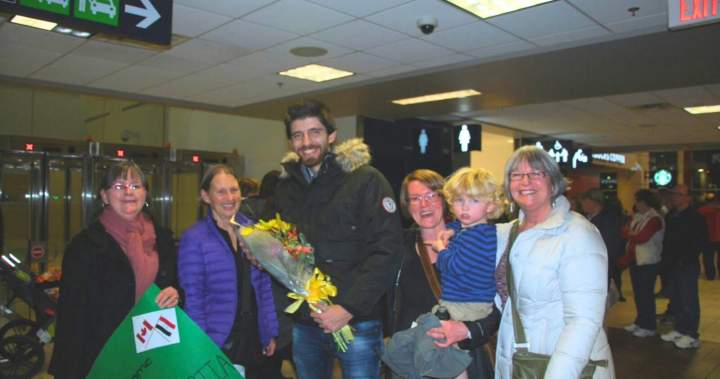
The BVOR program, while smaller in scale compared to other resettlement streams, has been instrumental in transforming the lives of countless individuals and families seeking refuge. A shining example of its profound impact is Tareq Hadhad, whose family arrived in Nova Scotia in 2015 as Syrian refugees. Forced to flee the devastating civil war in their homeland, the Hadhads were sponsored by a compassionate community group in Antigonish, N.S., through the very BVOR program now on hold.
“Canadians are born everywhere. It just takes them a little bit to get here,” Hadhad eloquently stated, encapsulating the spirit of hope and opportunity that programs like BVOR foster. His family’s journey from displacement to prosperity is a powerful testament to the program’s efficacy. Upon settling in the small Maritime community, Hadhad’s father, a seasoned chocolate-maker from Damascus, rekindled his craft. With a loan from the community and successful crowdfunding efforts, the family established Peace by Chocolate, a thriving business that has since become a national symbol of resilience and entrepreneurial spirit.
Today, more than a decade after their arrival, Tareq Hadhad is a proud Canadian citizen, an award-winning entrepreneur, and an inspirational speaker who routinely addresses international audiences. His family’s remarkable story even inspired a feature film. Reflecting on the BVOR program, Hadhad emphasized its foundational role in his success. “It meant everything, it is the reason why I’m standing right here right now and behind me is a beautiful flagship boutique on the Halifax waterfront,” Hadhad told reporters outside the Peace by Chocolate store on Lower Water Street. He added, “Without it, we would be still struggling as refugees somewhere, whether in Lebanon or in Turkey or in Egypt, Jordan, somewhere where we would not have been able to get a resettlement in any country, would not be able to start a new life, would have not been able get anything done over the past 10 years.” His personal narrative underscores the long-term, transformative benefits that a relatively small investment in refugee resettlement can yield, not just for individuals but for the Canadian economy and social fabric.
A Program’s Evolution and Quiet Decline
The Blended Visa Office-Referred program, first launched in 2013, was designed to leverage Canada’s unique model of private sponsorship by creating a partnership between private sponsors and the federal government. Under BVOR, the financial cost of supporting refugees for their first year in Canada was divided equally between private organizations and the federal government. Critically, the refugees supported through BVOR were identified by the United Nations High Commissioner for Refugees (UNHCR) as particularly vulnerable and in need of resettlement, often having no other durable solution. This dual-pronged approach was intended to accelerate the resettlement process for those most at risk, complementing the larger Private Sponsorship of Refugees (PSR) program where sponsors identify specific refugees.
In its early years, particularly during the peak of the Syrian refugee crisis between 2015 and 2017, BVOR played a significant role in Canada’s humanitarian response. At one point, the program aimed to resettle up to 1,000 individuals annually. However, over the past decade, there has been a noticeable and consistent reduction in the program’s target immigration numbers. From its initial capacity, the target dwindled to just 100 people in recent years, and further decreased to a mere 50 for the past year. This gradual contraction signaled a shifting priority within federal immigration strategies long before the recent halt.
Community groups, who rely on such programs for their planning and outreach, discovered the program’s suspension not through a formal announcement, but through indirect channels and internal communications. This lack of transparency has been a major point of contention for organizations that dedicate immense volunteer effort and resources to preparing for new arrivals.
Official Stance and Community Backlash
A spokesperson for Immigration, Refugees and Citizenship Canada (IRCC) confirmed the program’s closure, stating, “all remaining applications will continue to be processed, and individuals already matched with sponsors will continue to arrive in Canada and receive support as intended.” The IRCC justified the decision by citing resource allocation: “The program required significant resources to support a small number of admissions. In 2025, it admitted 82 people against a target of 100. The 2026 target was 50, and final figures are not yet available,” the statement read.
While the IRCC frames the decision as an efficiency measure, focusing on the ratio of resources to admissions, refugee advocacy groups argue that this perspective overlooks the immense value and cost-effectiveness of community engagement. The BVOR program, by design, shared the financial burden and, crucially, distributed the labor-intensive settlement support across hundreds of dedicated volunteer groups nationwide. These groups, often operating with minimal overhead, provide tailored, localized support that government agencies would struggle to replicate with the same personal touch and community integration benefits.
Marie Thompson, a volunteer director with Halifax’s Open Harbour Refugee Association, expressed the widespread sentiment of being blindsided. Her organization has actively utilized the BVOR program for 11 years, with its volunteer members committing thousands of hours to arrange housing, medical care, skills training, and education for new arrivals. “There’s no announcement. We had to read between the lines and access anonymous sources,” Thompson lamented. “We really need them to reconsider.”
Thompson’s group had successfully matched with a young woman from Kenya last September, who they hope will arrive in Canada in December. For months, they have been diligently raising money and collecting furniture, not just for this individual but for future arrivals they had anticipated sponsoring. “We wanted to sponsor another family in 2027. And then within the last two weeks, we found out that that won’t happen,” she explained, highlighting the disruption to long-term planning and the dashed hopes of both sponsors and refugees.

Beyond Financial Aid: The Unquantifiable Value of Community Support
The work undertaken by groups like Open Harbour Refugee Association extends far beyond financial assistance. Their dedication is about fostering true integration into Canadian society. “We try really hard to make their integration into Canadian society successful. And I don’t mean cultural integration. I mean finding jobs, getting extra education, babysitting, for example, when their parents have to go for job interviews. That’s what we do,” Thompson explained. She continued, “We become their new extended family. Our obligation is for one year, but we stay friends with them for years afterwards.”
This profound, personal level of support is difficult to quantify in purely financial terms, yet it is arguably the most critical component of successful refugee resettlement. It provides a safety net, a social network, and a sense of belonging that is vital for individuals rebuilding their lives in a new country. Without programs like BVOR, the burden of this intricate and essential settlement work falls entirely on the government or on the Private Sponsorship of Refugees (PSR) program, which relies on sponsors identifying specific refugees – a different mechanism with its own set of challenges and limitations.
Broader Implications and Canada’s Identity
The decision to suspend BVOR has sparked a broader conversation about Canada’s evolving approach to refugee resettlement and its international standing. Gauri Sreenivasa, co-director of the Canadian Council for Refugees (CCR), characterized the move as part of a “systematic closing” of opportunities for Canadians eager to help resettle refugees. “And that is a very concerning thing we have seen in the past few years: generally, private sponsorship opportunities reduced dramatically despite there being a huge demand and capacity and an interest among Canadians to bring and sponsor refugees,” she noted.
Sreenivasa further articulated the CCR’s concern: “Having these restrictions on private sponsorship effectively doesn’t allow Canadians to be as generous and welcoming as they want to and the overall patterns show a concerning reduction of Canadian government’s commitment to this (history of welcoming refugees), which is a core part of Canada’s identity.”
Historically, Canada has been recognized globally as a leader in refugee resettlement, pioneering the private sponsorship model and consistently welcoming significant numbers of displaced people. This commitment has often been cited as a defining characteristic of the nation. The quiet suspension of BVOR, coupled with the reduction in targets over time, raises questions about whether this commitment is wavering. In a world grappling with unprecedented levels of displacement – with the UNHCR reporting over 117 million forcibly displaced people globally by the end of 2023 – the need for international solidarity and robust resettlement programs remains critical.

The economic contributions of refugees, exemplified by Tareq Hadhad, further underscore the broader societal benefits of these programs. Refugees are not merely recipients of aid; they are often highly motivated individuals who, given the opportunity, contribute significantly to the economy through entrepreneurship, skilled labor, and community building. Peace by Chocolate, for instance, has created jobs, attracted investment, and become a recognizable Canadian brand, all stemming from a family’s resettlement through BVOR.
Moving Forward: A Call for Reconsideration
In an era where immigration has become a politically charged subject in many parts of the world, Hadhad’s message resonates deeply. He wants people to understand that the program works, not just in theory, but in practice, and that it embodies the very values Canada purports to uphold. “I became a father this February and it has changed my life in very immense ways. And I would not have imagined that my son would have been born anywhere else except this country,” he shared, highlighting the profound sense of belonging and generational impact that successful resettlement offers.
His plea for the program’s continuation is not just for his family, but for countless others who desperately need a chance at a new life. “This program has had a tremendous effect on many families like mine and I hope it’s going to continue into the future of changing lives and changing communities for the better,” Hadhad concluded.
The quiet halt of the BVOR program represents more than a bureaucratic adjustment; it signals a potential shift in Canada’s long-standing approach to refugee resettlement. As community groups and advocates call for reconsideration, the federal government faces increasing pressure to transparently articulate its long-term strategy for welcoming refugees and to ensure that the generosity and capacity of Canadian communities are not overlooked in the pursuit of administrative efficiency. The legacy of programs like BVOR, embodied in stories like Tareq Hadhad’s, serves as a powerful reminder of the profound human and societal value inherent in Canada’s tradition of offering a safe haven to those in need.