admin
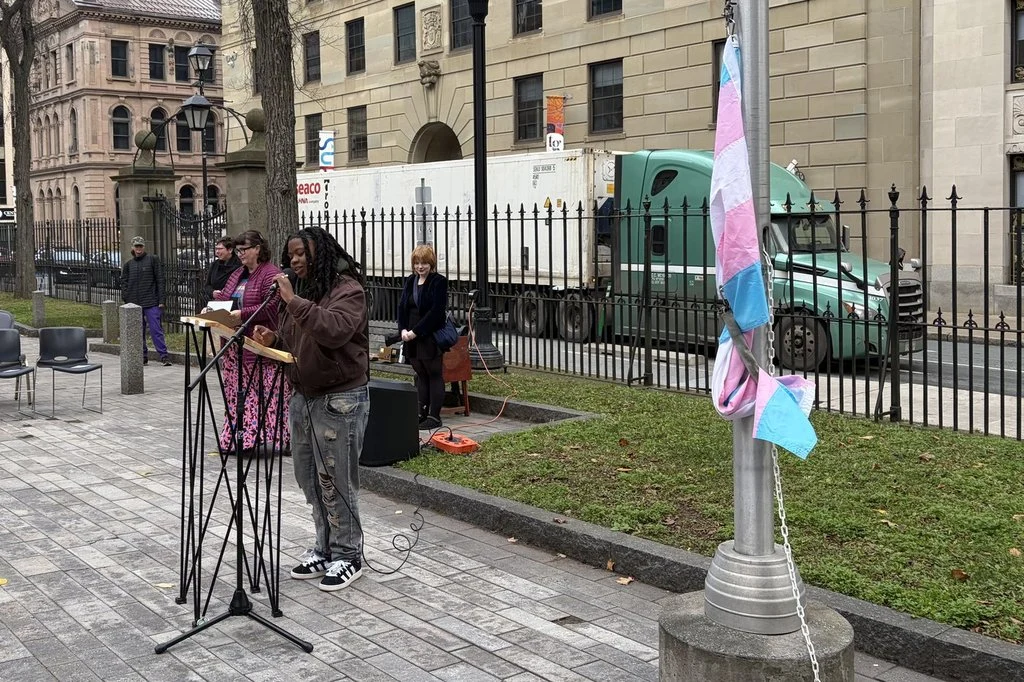
Halifax, Nova Scotia – On Friday, November 20, 2026, Nova Scotia’s first openly genderqueer Member of the Legislative Assembly (MLA), Lisa Lachance, issued a poignant and urgent call to action, challenging allies of the transgender community to intensify their efforts in safeguarding trans and gender-diverse individuals. Speaking at a solemn ceremony held in front of the Halifax legislature for Transgender Day of Remembrance (TDoR), Lachance underscored a deeply troubling trend: the escalating rates of violence targeting queer and trans people, asserting that mere solidarity is no longer sufficient in the face of persistent and rising threats.
The annual Transgender Day of Remembrance, observed globally, serves as a vital occasion to honour the memory of transgender and gender-diverse individuals whose lives have been tragically cut short by anti-transgender violence and hatred. This year’s observance in Halifax brought together a diverse group of approximately 50 attendees, including provincial politicians from all major parties, community advocates, and citizens, united in their commitment to remember the fallen and advocate for the living. Lachance, a Nova Scotia NDP member, articulated the critical need for allies to translate their support into tangible actions that actively contribute to the safety and well-being of trans people. “I think it’s so important that we gather here collectively and resolve to look out for these people,” they stated in an interview following the ceremony, emphasizing that the resolve must extend beyond commemorative gatherings.
The Genesis and Significance of Transgender Day of Remembrance
Transgender Day of Remembrance originated in 1999 as a vigil organized by transgender advocate Gwendolyn Ann Smith in San Francisco. It was created to honour the memory of Rita Hester, a Black transgender woman murdered in Allston, Massachusetts, on November 28, 1998. Hester’s murder, like many others, remained unsolved, highlighting the systemic neglect and indifference often faced by transgender victims of violence. The event quickly grew from a local vigil into an international day of observance, providing a platform for communities worldwide to mourn their dead, raise public awareness of anti-transgender violence, and advocate for justice and protection. TDoR serves not only as a day of mourning but also as a powerful call to action, urging society to confront transphobia and gender-based discrimination that fuel such violence. It reminds the world that trans lives are valuable and that the fight for their safety and dignity is ongoing.
The ceremony in Halifax, marked by a flag-raising and powerful poetry readings, mirrored the global intent of TDoR, reinforcing the message that while remembrance is crucial, it must be coupled with active, preventative measures. The choice of the legislature as a backdrop further amplified the call for legislative and systemic change to protect vulnerable communities.
A Stark Reality: Rising Hate Crimes Against Gender Identity
Lachance’s urgent plea was underpinned by alarming statistics that paint a grim picture of the current landscape for transgender and gender-diverse individuals in Canada. Data released by Statistics Canada in March indicated a disturbing upward trajectory in hate crimes targeting gender identity or expression. The report documented 139 police-reported incidents in 2024, marking the fourth consecutive year of increase. Even more concerning, the rate of hate crimes experienced by transgender and gender-diverse people has nearly tripled since 2020. This dramatic surge underscores a deteriorating safety environment for these communities.

“Reported violence is up, and yet we know that so much goes unreported,” Lachance remarked, highlighting the inherent limitations of official statistics. Many hate-motivated incidents, particularly those targeting marginalized groups, often go unreported due to fear of reprisal, distrust of law enforcement, or a belief that reporting will not lead to meaningful action. This underreporting suggests that the actual prevalence of anti-trans violence and discrimination is likely far higher than official figures indicate, making the need for robust allyship and systemic protection even more critical.
The increase in hate crimes against transgender individuals stands in contrast to the broader trend in some other hate crime categories, suggesting a specific and growing animosity directed towards gender identity. This pattern points to deeper societal issues, including the spread of misinformation, the politicization of trans rights, and a backlash against increasing visibility and acceptance of trans people. Such a hostile environment not only poses physical threats but also inflicts significant psychological and emotional toll, impacting mental health, sense of belonging, and overall quality of life for trans individuals.
The Power of Poetic Voice: Asiah Sparks’ Message of Resilience
A central and profoundly moving component of the Halifax ceremony was the poetry reading by Asiah Sparks, a celebrated Halifax poet and former youth poet laureate. Sparks delivered two original poems, dedicating them to trans individuals navigating hardship. Their words resonated deeply, offering solace and strength in the face of adversity. Sparks emphasized the importance of internal fortitude: “Just know that you’re bound to pass your hardest moments. A lot of times when we find ourselves in a dark time we can find ourselves looking for love and light in the eyes of others and forget all the love and light we have within ourselves.”
Sparks’ contribution highlighted the vital role of art and cultural expression in activism and healing. Poetry, in particular, offers a unique avenue for processing pain, articulating identity, and fostering community resilience. Their message served as a powerful reminder that while external support and protection are essential, the cultivation of inner strength and self-acceptance is equally crucial for trans individuals enduring societal pressures and threats. The performance underscored the multifaceted nature of support required by the trans community – encompassing not only political advocacy and legal protection but also emotional and spiritual sustenance.
A United Front: Political Attendance and Its Implications
The ceremony garnered significant cross-party attendance, with provincial politicians from the Progressive Conservative, Liberal, and NDP parties present, alongside the province’s lieutenant-governor. This broad political representation was acknowledged by Lachance as meaningful, signifying a degree of consensus on the importance of recognizing and condemning anti-trans violence. However, Lachance swiftly pivoted from acknowledging presence to demanding action: “We’re all here together, and now I challenge folks to take it all back into our communities. As allies, we all have a role to play to make (peoples’) lives better.”
The presence of elected officials from across the political spectrum sends a symbolic message of support and recognition. It suggests a shared understanding, at least on the surface, that the safety and rights of transgender people are not partisan issues. However, the true test of this political unity lies in the translation of presence into concrete policy and legislative initiatives. The challenge laid down by Lachance implores these political figures to move beyond ceremonial attendance and actively champion policies that protect trans individuals from discrimination, violence, and systemic barriers in healthcare, employment, housing, and legal recognition. This includes advocating for stronger hate crime legislation, ensuring access to gender-affirming care, promoting inclusive education, and fostering a societal environment where trans people can live authentically without fear.

The Broader Impact and Implications of Rising Anti-Trans Violence
The rise in anti-trans violence carries far-reaching implications that extend beyond the immediate victims. It erodes trust in institutions, fosters a climate of fear and insecurity within the transgender community, and signals a regression in broader human rights progress. When a segment of the population experiences such a disproportionate increase in hate-motivated attacks, it reflects a societal failure to uphold principles of equality, dignity, and safety for all.
This trend also highlights the global struggle for trans rights. While some nations and regions have made significant strides in legal recognition and social acceptance, others are witnessing a backlash, often fueled by conservative political movements and moral panics. Canada, despite its reputation for progressive values, is not immune to these global currents, and the Statistics Canada data serves as a stark reminder that vigilance and continuous advocacy are essential.
For Nova Scotia, a province that has seen increasing visibility and advocacy for LGBTQ+ rights, the challenge from MLA Lachance serves as a critical inflection point. It demands an honest assessment of whether provincial policies and community initiatives are adequately addressing the root causes of transphobia and providing sufficient protection. This could involve enhanced funding for LGBTQ+ support organizations, comprehensive anti-discrimination training for public sector employees, and public awareness campaigns designed to combat misinformation and promote understanding of gender diversity.
Defining Active Allyship in a Challenging Era
Lachance’s challenge to allies to "do more" implicitly calls for a redefinition of allyship in the current climate. Passive allyship, characterized by mere acceptance or occasional support, is no longer sufficient. Active allyship demands tangible engagement, which can manifest in various forms:
- Advocacy: Actively lobbying for and supporting policies that protect trans rights, including non-discrimination laws, accessible healthcare, and legal recognition of gender identity.
- Education: Taking responsibility for one’s own education on trans issues, using correct pronouns, and respectfully challenging transphobic remarks or misinformation in personal and professional settings.
- Visibility: Using one’s platform and privilege to amplify trans voices, share their stories, and ensure their concerns are heard in decision-making spaces.
- Intervention: Safely intervening in instances of transphobic harassment or violence, or reporting such incidents to appropriate authorities and support networks.
- Support: Providing direct support to trans individuals and organizations, through volunteering, donations, or offering safe spaces.
- Self-Reflection: Continuously examining one’s own biases and privileges to ensure allyship is genuine and effective, rather than performative.
The call to action from Lisa Lachance at the Transgender Day of Remembrance ceremony in Halifax serves as a potent reminder that the fight for transgender equality and safety is far from over. The rising tide of hate crimes against gender-diverse individuals demands a collective, sustained, and intensified response from allies, policymakers, and communities alike. The memory of those lost to violence must not only be honoured but must also galvanize a renewed commitment to building a safer, more inclusive world where all trans people can live authentically, free from fear and discrimination. The challenge is clear: it is time for allies to move beyond remembrance and embrace robust, proactive action.