admin
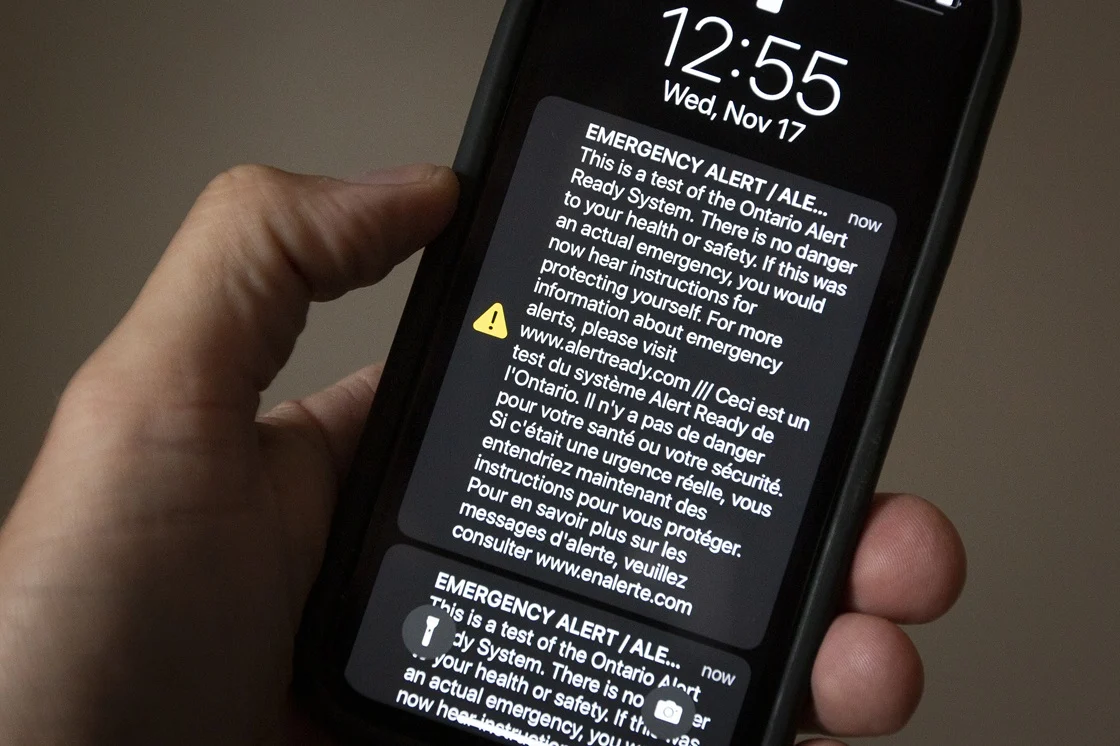
Canadians across the vast expanse of the country are poised for a nationwide resonance on Wednesday, November 18, 2026, as their mobile phones, televisions, and radios are scheduled to emit the distinctive tone of the national Alert Ready system. This comprehensive exercise marks the second such test of the year, a critical component of maintaining and enhancing Canada’s vital infrastructure for public safety. The coordinated activation is meticulously designed to rigorously evaluate the operational functionality of the system from end-to-end, while simultaneously reinforcing public awareness regarding the critical role these alerts play in emergent situations.
The Alert Ready system, a collaborative initiative involving federal, provincial, and territorial governments, Pelmorex Corp. (the operator of The Weather Network and MétéoMédia), and various broadcasters and wireless service providers, serves as Canada’s unified platform for disseminating urgent public safety messages. On the designated day, the familiar alert tone will reverberate across all provinces and territories, broadcast simultaneously through television and radio channels, and delivered directly to any compatible mobile device connected to an LTE or 5G network. This widespread distribution ensures maximum reach, reflecting the imperative that critical safety information transcends geographical and technological divides. The upcoming test on November 18 is not merely a technical drill; it is a foundational pillar in the nation’s preparedness strategy, aiming to instill confidence in the system’s reliability and to embed the alert’s significance within the public consciousness.
Understanding Alert Ready: A Critical Public Safety Tool
At its core, Alert Ready is more than just a siren; it is a sophisticated, multi-platform emergency alerting system established to provide Canadians with critical and potentially life-saving information during times of imminent danger. Its genesis lies in the recognition of a profound need for a standardized, reliable, and instantaneous method for governments to communicate urgent threats to their populations. The system’s evolution has been shaped by lessons learned from historical disasters and a commitment to leveraging modern communication technologies to safeguard lives and property.
The legal and regulatory framework underpinning Alert Ready is primarily overseen by the Canadian Radio-television and Telecommunications Commission (CRTC), which mandates its implementation by broadcasters and wireless service providers. This regulatory mandate ensures that the system operates uniformly across diverse communication platforms and that its reach is as extensive as possible. The technical backbone of Alert Ready is built upon the Common Alerting Protocol (CAP) standard, an international data format for exchanging public warnings and emergency information. This interoperable standard allows for seamless communication between various government agencies and dissemination partners, ensuring that alerts are consistent and accurately delivered regardless of the originating authority or the receiving device.
When an emergency arises, authorized government officials – spanning federal, provincial, and territorial levels – initiate the alert. These alerts are then rapidly disseminated through Pelmorex Corp.’s National Alert Aggregation and Dissemination (NAAD) System. From there, they are instantly transmitted to television and radio broadcasters, as well as to wireless service providers. For mobile devices, the system leverages cell broadcast technology, which allows alerts to be geo-targeted to specific areas affected by an emergency. This precision targeting ensures that only those directly at risk receive the alert, minimizing unnecessary public alarm and enhancing the relevance of each message. The distinctive tone, coupled with a concise, informative message in both English and French, is designed to immediately capture attention and convey the urgency of the situation.
The Rationale Behind Regular System Testing
The consistent, bi-annual testing of the Alert Ready system is a cornerstone of its operational integrity and public utility. These scheduled drills, typically occurring in May and November each year, serve multiple critical objectives. Firstly, they provide an invaluable opportunity to verify the end-to-end functionality of the entire alerting chain. This includes testing the process from the moment an authorized government agency issues an alert, through its aggregation and dissemination by Pelmorex, to its final broadcast by television and radio stations and its delivery to individual mobile devices. Each component must operate flawlessly for the system to be effective during a real emergency.
Secondly, these tests are instrumental in identifying and rectifying any technical glitches, software incompatibilities, or infrastructure vulnerabilities that might emerge within the complex network. Proactive identification and resolution of such issues ensure that the system remains robust, resilient, and ready to perform optimally when it matters most. Data collected during these tests, including delivery rates, latency, and system performance metrics, informs ongoing improvements and upgrades.

Thirdly, and equally important, regular testing plays a crucial role in building and maintaining public awareness and familiarity with the emergency alert system. By periodically experiencing the alert tone and format, citizens become accustomed to its presence, reducing the likelihood of panic or confusion during an actual emergency. This familiarity fosters a critical understanding that when the Alert Ready tone sounds, it signifies an urgent, potentially life-threatening situation requiring immediate attention and action. Public feedback following these tests, while sometimes expressing annoyance, is also vital for gauging comprehension and identifying areas where public education efforts can be strengthened. Surveys conducted by various agencies often indicate that while the alerts can be disruptive, the vast majority of Canadians understand their importance for public safety.
The chronology of these tests underscores a commitment to continuous improvement. Since the nationwide rollout of wireless public alerting in April 2018, regular tests have become standard practice, refining both the technical delivery and the public’s understanding of the system’s purpose. Each test builds upon the lessons of the last, contributing to a more effective and reliable national alerting mechanism.
Diverse Emergencies Triggering Critical Alerts
The scope of emergencies for which the Alert Ready system is activated is broad, encompassing a range of natural disasters, public safety threats, and specific critical incidents. These alerts are reserved for situations where there is an immediate and grave danger to life or property, necessitating prompt public action.
-
Natural Disasters: Canada, with its vast and varied geography, is susceptible to numerous natural phenomena that can pose significant threats. Alert Ready is crucial for issuing warnings about:
- Tornadoes: Especially prevalent in the Prairies and parts of Ontario, tornado warnings provide precious minutes for residents to seek shelter.
- Floods: Riverine, flash, and coastal flooding can devastate communities. Alerts guide evacuations and inform residents of rising water levels.
- Wildfires: With increasing frequency and intensity, wildfire alerts are critical for informing residents of rapidly advancing fires and mandating evacuations.
- Earthquakes: Particularly in British Columbia, alerts can provide short-notice warnings for impending seismic activity, allowing for "drop, cover, and hold on" protocols.
- Tsunamis: Coastal regions, especially on the Pacific and Atlantic fronts, rely on tsunami warnings for timely evacuation.
- Severe Weather: This includes blizzards, extreme cold warnings, heatwaves, and severe thunderstorms that can lead to hazardous conditions.
-
Public Safety Threats: Beyond natural phenomena, the system is deployed for human-made or civil emergencies:
- Hazardous Material Incidents: Spills or leaks of dangerous substances requiring immediate shelter-in-place or evacuation orders.
- Civil Emergencies: Events such as terrorist threats, widespread power outages, or other incidents that pose a significant threat to public order and safety.
- Active Threat Situations: Alerts can warn the public about active shooter incidents or other violent events, advising people to seek cover or avoid specific areas.
-
Child Abductions (Amber Alerts): A particularly sensitive and urgent category, Amber Alerts are issued when a child has been abducted and their life is believed to be in danger. These alerts provide crucial details about the child, suspected abductor, and vehicle, leveraging the public’s eyes and ears in the search effort. Statistics consistently show that Amber Alerts significantly increase the chances of safely recovering abducted children, underscoring the system’s direct impact on saving lives.
The decision to issue an actual emergency alert is not taken lightly. It involves a stringent, multi-layered authorization process by designated government agencies, ensuring that alerts are issued only when necessary and that the information conveyed is accurate, actionable, and vital for public safety. This rigorous protocol prevents the misuse of the system and maintains public trust in its seriousness.
The Imperative of a Non-Opt-Out Policy
One of the most defining characteristics of the Alert Ready system is the inability for individuals to opt out of receiving these critical notifications. This mandatory reception policy is not an oversight but a deliberate and essential design choice, reflecting the profound public safety mandate of the system. The rationale behind this non-opt-out feature is rooted in the understanding that emergency alerts are a "last resort" communication tool, intended to deliver information that could literally mean the difference between life and death.

Unlike general public service announcements or non-critical notifications, emergency alerts address immediate threats to life, health, or property. Allowing individuals to disable these alerts would create dangerous vulnerabilities, potentially leaving segments of the population unaware of an imminent danger – whether it’s an approaching tornado, a mandatory evacuation order due to a wildfire, or an Amber Alert for a missing child. The potential for catastrophic consequences, including loss of life, far outweighs any inconvenience caused by an alert test or an actual emergency message.
This mandatory reception approach is consistent with international best practices for national emergency alerting systems. Countries like the United States (with its Wireless Emergency Alerts, or WEA), Japan, and various European nations also implement similar non-opt-out policies for their critical public safety alerts. This global consensus underscores the universal recognition that in moments of extreme peril, the government has a responsibility to reach every citizen with vital information, and citizens have a corresponding responsibility to receive it. The temporary disruption of a test or an urgent alert is a small price to pay for the assurance that during a genuine crisis, no one will be left uninformed.
Technical Evolution and Future Directions
The Alert Ready system is a dynamic entity, continuously evolving with technological advancements. The transition from older, more limited broadcasting methods to the current digital and mobile-centric approach represents a significant leap forward in public safety communication. The integration with LTE and 5G networks, in particular, has enhanced the system’s capabilities in terms of speed, reliability, and geographical precision. 5G, with its lower latency and higher bandwidth, holds the promise of even faster and more robust alert delivery, potentially enabling richer content formats in the future.
Future enhancements for Alert Ready are likely to focus on further improving accessibility and inclusiveness. Efforts are ongoing to ensure that alerts are not only broadcast in Canada’s official languages (English and French) but also consider provisions for other widely spoken languages in diverse communities. Furthermore, developing features that cater to persons with disabilities – such as enhanced text-to-speech functionalities, visual alerts for the hearing impaired, and haptic feedback for the visually impaired – will be crucial for ensuring equitable access to life-saving information.
Despite its advancements, the system faces ongoing challenges. Ensuring universal coverage, particularly in Canada’s vast and sparsely populated remote and rural areas, remains a priority. While satellite radio and some localized broadcast solutions exist, maintaining consistent mobile network coverage across the entire landmass is a continuous infrastructure challenge. Another critical consideration is managing "alert fatigue." While regular testing is essential for awareness, an increase in non-critical alerts could desensitize the public, leading to people ignoring vital warnings. Therefore, a careful balance must be struck between informing the public and maintaining the sanctity of the alert system for truly critical events. Cybersecurity is also paramount; protecting the integrity of the Alert Ready system from potential malicious interference or cyberattacks is an ongoing and evolving priority for all partners involved.
Statements and Official Responses
Officials from Public Safety Canada consistently emphasize the critical role of Alert Ready as a cornerstone of the national emergency management strategy. "The Alert Ready system represents a vital layer of protection for all Canadians," stated a representative from Public Safety Canada. "These regular tests are not a mere formality; they are essential drills that ensure our infrastructure is robust, our protocols are sound, and our public is prepared. We urge everyone to familiarize themselves with the alert tone and to understand that when it sounds, it’s a call to immediate action."
Representatives from Pelmorex Corp., the operators of the NAAD system, reiterate their unwavering commitment to public safety. "Our partnership in Alert Ready is a testament to our dedication to leveraging technology for the greater good," commented a spokesperson for Pelmorex. "The November 18 test is another opportunity to fine-tune our systems and to reinforce the importance of this critical service. We work tirelessly with our government and wireless partners to ensure the seamless delivery of these vital messages."
Wireless service providers across Canada confirm their readiness and ongoing investment in the infrastructure required to support Alert Ready. "Our networks are designed to prioritize emergency alerts, ensuring they reach our subscribers swiftly and reliably," explained an executive from a major Canadian wireless carrier. "We continuously invest in upgrading our technology, including our LTE and 5G capabilities, to ensure the Alert Ready system performs optimally across our extensive coverage areas."

Provincial emergency management organizations also stress the importance of public participation in understanding and responding to alerts. "Timely information saves lives," noted a director from an Ontario emergency management agency. "Whether it’s a severe weather warning or an Amber Alert, these notifications empower individuals to make informed decisions that protect themselves and their families. We encourage everyone to take a moment during the test to consider their own emergency preparedness plans."
Broader Impact and Implications
The implications of a robust and widely understood emergency alerting system like Alert Ready extend far beyond the immediate delivery of a message. It profoundly influences public preparedness, emergency response coordination, and even broader social cohesion.
By regularly reminding citizens of potential threats and providing a direct, authoritative channel for critical information, Alert Ready fosters a culture of readiness. It prompts individuals and families to develop emergency plans, assemble emergency kits, and stay informed about local hazards. This proactive approach to preparedness can significantly mitigate the impact of disasters, reducing casualties and property damage.
In terms of emergency response, the system acts as a force multiplier. Timely warnings allow emergency services to pre-position resources, activate response protocols, and manage evacuations more effectively. For instance, an early flood warning might enable communities to deploy sandbagging efforts, while a wildfire evacuation order can clear roads for emergency vehicles, ensuring safer and more efficient operations. The economic impact of such mitigation, though difficult to quantify precisely, is substantial, preventing costly damages and accelerating recovery efforts.
From a societal perspective, Alert Ready embodies a collective commitment to safety. It serves as a unifying mechanism, reminding Canadians that they are part of a shared national safety net. In moments of crisis, the ability to communicate uniformly and effectively across diverse regions and demographics reinforces social cohesion, enabling communities to act together in the face of adversity. The public trust garnered by a reliable system ensures that when the critical tone sounds, it is heeded, uniting a nation in vigilance and action.
As Canada approaches the November 18, 2026, test, the exercise stands as a powerful reaffirmation of the nation’s dedication to public safety. The Alert Ready system is a testament to technological advancement, inter-jurisdictional cooperation, and a collective responsibility to protect every Canadian from imminent threats. Its regular testing and continuous evolution ensure that this vital public service remains a steadfast guardian in an unpredictable world.