Jia Lissa
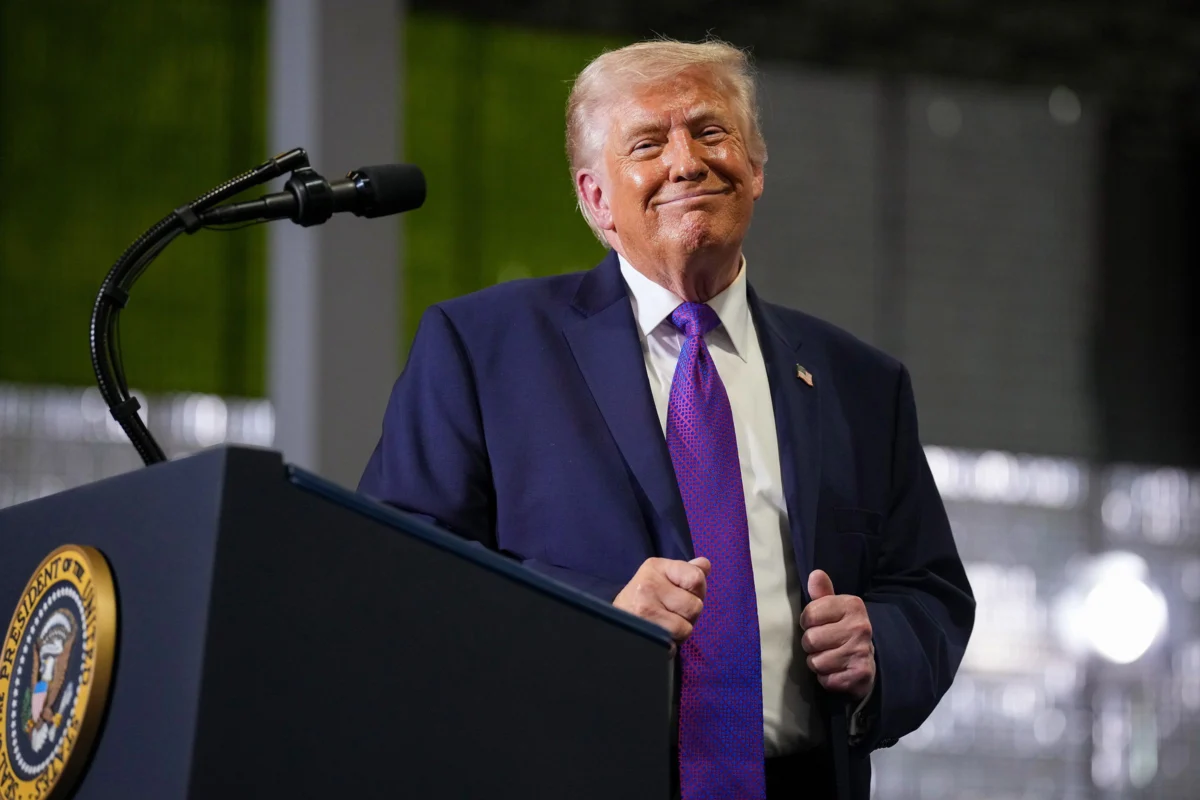
The Republican Party is grappling with a profound internal crisis following an unexpected and sweeping defeat in the recent midterm elections, a result that saw Democrats seize control of both the House of Representatives and the Senate. In the immediate aftermath, a cascade of prominent figures within the "MAGAworld" movement has pointed the finger of blame squarely at former President Donald Trump and the strategies associated with his political brand. This unprecedented internal discord signals a potential realignment within the conservative movement, challenging Trump’s long-standing dominance and sparking a contentious debate over the party’s future direction.
The Electoral Catastrophe: A Reversal of Expectations
Election night delivered a stunning blow to Republican aspirations. Contrary to widespread predictions of a "red wave" that would sweep the GOP into commanding majorities, Democrats secured a net gain of 25 seats in the House and 3 seats in the Senate. This included surprising victories in historically conservative districts and states, such as a Senate seat flip in Arizona and House gains across previously solid red states like Ohio and Florida, effectively shifting the balance of power in Washington. The losses were particularly galling for Republicans, given the economic headwinds and the sitting president’s low approval ratings that typically favor the opposition party in midterms. Instead, voters appeared to reject many of the Trump-backed candidates, particularly those who espoused extreme rhetoric or continued to deny the legitimacy of the 2020 presidential election. Exit polls indicated that key issues such as abortion rights, the economy, and the perceived threat to democracy significantly mobilized Democratic voters, while a segment of independent voters recoiled from the hardline positions advocated by many Trump loyalists. The proposed "Iran war," a policy point that emerged in the post-election commentary, also registered as a "massive losing issue" in some exit polls, suggesting a disconnect between some MAGA priorities and broader voter concerns.
Trump’s Immediate Reaction: Deflection and Denial
As the magnitude of the Republican losses became clear on Tuesday evening, Donald Trump’s initial reaction was one of characteristic deflection and denial. Rather than accepting responsibility, the former president lashed out at Fox News, accusing the conservative media giant of undermining Republican efforts by "constantly and consistently putting on the Dumocrat opposition, and worse." Writing on his Truth Social platform, Trump asserted, "[Fox] bears responsibility for these losses." Later that night, in a phone call to Fox News, he extended congratulations to the Democrats on their electoral success, a gesture that some interpreted as a sarcastic jab rather than genuine goodwill.
Trump further distanced himself from the electoral outcome, maintaining that the historic blowout was not a reflection of his popularity. "I wasn’t on the Ballot and if I was, we would have won IN A LANDSLIDE!" he declared on Truth Social. He subsequently posted a cryptic image of a red baseball hat emblazoned with the word "VETO," an enigmatic message that offered little clarity but underscored his defiant posture. This immediate pivot to blaming external forces, particularly a media outlet historically friendly to his base, set the tone for the ensuing internal strife within the MAGA movement.
The MAGA Revolt: A Cascade of Blame
In the hours and days following Trump’s initial reactions, the carefully constructed facade of MAGAworld unity began to crack. A wave of prominent right-wing figures, influencers, and commentators publicly challenged Trump’s leadership and policy decisions, attributing the midterm debacle directly to him.
One of the most vocal critics was Matt Walsh, a right-wing podcaster, who described the election results as "a political catastrophe of historic proportions." Walsh did not mince words, characterizing Trump as "an 80-year-old lame-duck president" and directly blaming him for the losses. His critique focused on Trump’s decision to initiate a hypothetical "war with Iran" and his perceived preoccupation with "trivial matters," citing examples such as attempting to rename artificial intelligence to "super intelligence" and renaming the White House ballroom. This highlighted a growing frustration among some conservatives with Trump’s focus on personality and less on substantive policy or broader strategic vision.
Mike Cernovich, another right-wing commentator, offered a different angle of criticism, asserting that Trump’s decision to "ostracize libertarian voters" was partly to blame for the GOP’s poor performance. This suggests a recognition that the MAGA coalition might be too narrow and that alienating specific voter blocs, even small ones, could have significant consequences in close elections.
Perhaps most notably, Mike Flynn, the disgraced former national security adviser who was a prominent proponent of false claims regarding the 2020 election, also laid blame at Trump’s feet. "Someone needs to look in a mirror," Flynn wrote on X (formerly Twitter), a thinly veiled criticism directed at the former president. In a somewhat contradictory move, Flynn also controversially blamed "Christians for not showing up to vote," suggesting a dual blame strategy that highlighted both internal leadership failures and perceived voter apathy within conservative religious communities.
The "Sleeper Cell" Accusation and Other Radical Theories
The criticism escalated to extraordinary levels with Alex Jones, the notorious conspiracy theorist. On his show Tuesday night, Jones declared, "I think he’s a Democrat. I’m gonna just say it right now." He continued, "I’ve tried to salvage Trump. I’ve not been sure. I’ve invested so much—maybe I was blind to it—I think he’s the ultimate Democrat sleeper cell, and he works for them. I’m 100 percent at war with Trump." This dramatic pronouncement, accusing Trump of being a clandestine operative for the Democratic Party, represented a significant ideological rupture, reflecting the deep disillusionment and tendency towards extreme explanations prevalent in certain corners of the far-right.
Other MAGA figures, such as right-wing commentators Jack Posobiec and Nick Sortor, echoed the criticism of the "Iran war" policy as a major contributor to the losses. While they did not explicitly name Trump in their posts, the timing and context strongly implied his culpability, aligning with Walsh’s earlier remarks.
Marjorie Taylor Greene, the former congresswoman who had previously broken with Trump earlier in the year, seized on the opportunity to reaffirm her critical stance. "Tonight was a total referendum on Trump. He told people to vote like he was on the ballot and they did," Greene wrote on X, directly linking Trump’s perceived influence to the electoral setback. Her statement underscored the argument that Trump’s pervasive presence and personal endorsements turned the midterms into a de facto judgment on his continued leadership.
Silence, Continued Support, and Alternative Narratives
Amidst the chorus of criticism, some prominent figures within MAGAworld maintained a noticeable silence or offered alternative explanations that shielded Trump from direct blame.
Elon Musk, who had reportedly invested substantial personal funds into supporting Republican candidates, remained non-committal on who was responsible for the losses. His public comments were limited to a self-deprecating joke about his "election-interfering space lasers didn’t work this time" and an observation that the "Iran war" issue was "interesting" as a "massive losing issue" in exit polls. This guarded response from a major financial backer suggested either a strategic reluctance to wade into the internal GOP conflict or a genuine uncertainty about the root causes of the defeat.
Similarly, Rogan O’Handley, known as DC Draino, a highly influential MAGA figure, offered no public reaction to the results. Speaker of the House Mike Johnson, who was reelected, acknowledged that the results were "not what we’d hoped and fought for" but refrained from assigning blame. Stephen Miller, former White House deputy chief of staff, also remained publicly silent. However, his wife, Katie Miller, who had previously amplified election conspiracy theories, blamed "the media," labeling it "a propaganda arm of the woke left." This echoed a long-standing conservative narrative that seeks to externalize blame by targeting mainstream news organizations.
A smaller contingent of right-wing figures continued to staunchly defend Trump. Laura Loomer, a prominent MAGA influencer, praised Trump as "a hero for stopping Iran from having a nuclear weapon" and urged him to "finish the job." Instead of blaming the former president, Loomer lamented the "end of America" and the "rise of communism," framing the losses within a broader apocalyptic narrative rather than as a specific failure of leadership.
Lara Logan, a former Fox News host turned conspiracy theorist, posited an elaborate theory, blaming an "anonymous group of Republicans who conspired to bring about the defeat so they could get rid of the MAGA movement and the establishment would retake the party." This narrative, suggesting an internal sabotage by "establishment Republicans," served to deflect blame from Trump and reinforce the idea of a constant battle against internal and external adversaries.
Chaya Raichik, who operates the popular Libs of TikTok accounts, attributed the losses to a "years-long Democrat plot to import millions of foreigners," invoking a nativist conspiracy theory to explain the electoral shift.
Kari Lake, Trump’s nominee for ambassador to Jamaica, steadfastly refused to blame the former president. Instead, she was one of the few election deniers who doubled down on claims of a stolen election. "America, do you think that our elections are honest? Do you have complete confidence that only legal votes were counted?" Lake wrote, perpetuating the unsubstantiated narrative of widespread fraud as the primary explanation for the GOP’s poor performance.
Internal Factionalism and Self-Reflection
The blame game also turned inward within the right-wing ecosystem. Harrison Smith, a host on Steve Bannon’s War Room show, attacked fellow right-wing influencers, specifically naming Laura Loomer, Ben Shapiro, Mark Levin, Will Chamberlain, and the lobbying organization AIPAC, for contributing to the losses. This demonstrated the deep ideological fissures and competitive dynamics within the conservative media landscape.
In a rare moment of introspection, though framed unusually, former homeland security secretary Kristi Noem took a unique approach to assigning blame. She posted on X that the "massive losses happened because we were too successful in the first year of the Trump administration." This unusual rationale suggested that early successes had inadvertently led to complacency or a loss of urgency among the base, a convoluted attempt to acknowledge failure without directly criticizing Trump’s later actions.
Implications for the Republican Party and Beyond
The midterm fallout represents a critical juncture for the Republican Party and the future of the MAGA movement. The widespread willingness of influential conservative voices to publicly blame Donald Trump marks a significant departure from the near-unanimous loyalty that characterized his presidency and immediate post-presidency. This internal revolt challenges Trump’s role as the undisputed leader of the party and could have profound implications for his potential 2024 presidential bid.
The diverse array of explanations for the defeat – ranging from policy failures (Iran war, trivial matters), to strategic missteps (ostracizing libertarians, poor endorsements), to ideological purity tests (Trump as a Democrat sleeper cell), to external conspiracies (media, Republican saboteurs, immigrant plots, stolen elections) – highlights a deep ideological fragmentation within the conservative movement. This lack of a unified diagnosis makes it challenging for the party to coalesce around a clear path forward.
For the Republican Party as a whole, the midterm results underscore the urgent need for a strategic reassessment. The reliance on candidates endorsed solely for their loyalty to Trump, particularly those who embraced election denialism, proved to be a significant liability in competitive races. The internal strife suggests that a debate over the party’s direction, its message, and its leadership is inevitable. Whether this leads to a weakening of Trump’s influence and the rise of new conservative leaders, or further entrenches existing divisions, remains to be seen. The coming months will be crucial in determining if the GOP can bridge these internal divides and present a more unified and electorally viable front in future elections.