admin
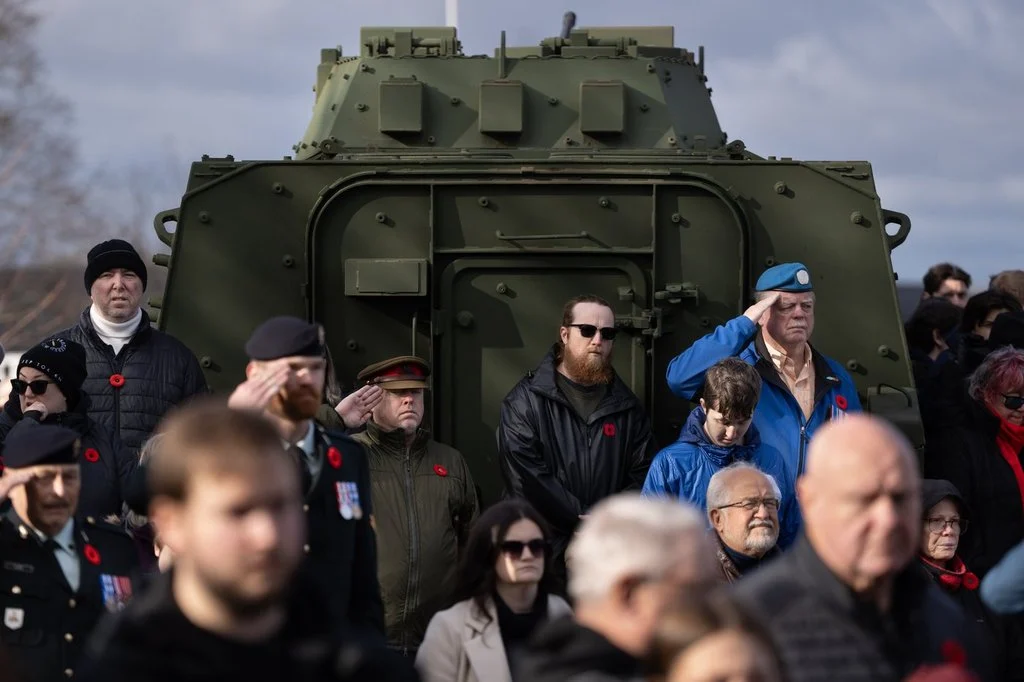
Across Atlantic Canada, Remembrance Day ceremonies on Wednesday, November 11, 2026, were imbued with a poignant duality, honouring the sacrifices of generations past while simultaneously acknowledging the profound grief stemming from the recent, deadly fire at Canadian Forces Base (CFB) Wainwright in Alberta. Military padres leading solemn gatherings in Halifax and St. John’s dedicated significant portions of their addresses to the four soldiers tragically killed and dozens injured in the training incident last month, underscoring the ever-present risks faced by those who serve. The ceremonies, marked by quiet reverence and the vibrant crimson of poppies, served as a powerful reminder that the cost of freedom continues to be paid in contemporary times, often far from traditional battlefields.
The Wainwright Tragedy: A Sobering Prelude to Remembrance
The shadow of the CFB Wainwright fire loomed large over this year’s commemorations. On a fateful day last month, a routine training exercise at the sprawling Alberta base turned catastrophic when unexpected, powerful winds rapidly propelled a nearby grass fire across the training area. The inferno claimed the lives of four Canadian Armed Forces (CAF) members: Sergeant Morgan Wong of Edmonton, Alberta; Private Shaun Farrell of Prince Albert, Saskatchewan; Private Aidan Goulding of North Vancouver, British Columbia; and Private Hayden Lykkemark of Langley, British Columbia. In addition to these heartbreaking fatalities, 39 other service members sustained injuries, with many still undergoing critical care and recovery in hospital facilities across the country.
The incident sent shockwaves through the CAF and the nation, serving as a stark and painful reminder of the inherent dangers associated with military service, even during peacetime training. CFB Wainwright, a key training hub for the Canadian Army, particularly for its Western-based units, is known for its rigorous exercises designed to prepare soldiers for deployment in diverse and challenging environments. Such training, while essential for operational readiness and troop safety in actual combat zones, frequently involves controlled explosions, live-fire drills, and maneuvers in varied terrain, all of which carry inherent risks. The specific circumstances of the wind-driven wildfire highlighted the unpredictable elements that military personnel must contend with, even when meticulous safety protocols are in place. An ongoing investigation by military authorities and the Department of National Defence (DND) is expected to meticulously examine the chain of events, weather conditions, emergency response, and existing safety measures to prevent future tragedies.
Atlantic Canada Unites in Commemoration and Grief
From the historic waterfronts of Halifax to the rugged coastlines of St. John’s, communities across Atlantic Canada gathered to observe Remembrance Day. The tradition, dating back to 1919, marks the armistice signed between the Allies and Germany on November 11, 1918, which brought an end to the First World War. Each year, at the 11th hour of the 11th day of the 11th month, Canadians pause to remember the extraordinary sacrifices made by service members in all conflicts, peacekeeping missions, and domestic operations. This year, the solemnity was undeniably deepened by the recent losses at Wainwright.
Halifax: A City United in Commemoration
In downtown Halifax, hundreds converged at the Grand Parade, a historic public square that has witnessed generations of military parades and civic ceremonies. Padre Steven Cochrane, a spiritual leader within the CAF, led the Halifax ceremony with a powerful address that intertwined historical remembrance with contemporary grief. He specifically honoured Canadian Armed Forces members and the profound sacrifices they make, not only on distant battlefields but also during the demanding and often perilous training exercises conducted domestically. "At the 11th hour of the 11th month, the 11th day, time stands still for a moment," Padre Cochrane articulated, his voice resonating across the hushed crowd. "We remember those who died not for war, but for a world that would be free and at peace." His words subtly broadened the traditional scope of remembrance, encompassing the modern realities of military service where training incidents, though tragic, are an unavoidable part of maintaining a capable and ready force. The ceremony included traditional elements such as the Last Post, the two minutes of silence, and the laying of wreaths by dignitaries, veterans, and community groups, all set against the backdrop of the Halifax City Hall and the Old Town Clock, symbols of enduring civic and military history.
St. John’s: Echoes of History and Contemporary Loss
In St. John’s, Newfoundland and Labrador, a city deeply steeped in military history, the atmosphere was particularly poignant. Despite the cold, rainy weather, a determined crowd packed the two downtown streets flanking the National War Memorial, with individuals spilling onto the connecting stairs. Bright red poppies, worn proudly on thick, dark jackets, created a striking visual against the grey backdrop, symbolizing memory and hope. Padre Stephen Courtney, officiating at the iconic National War Memorial, led his speech with a direct and heartfelt reflection on the four soldiers killed at Wainwright and the dozens who were injured. "We remember those who died, the injured, especially those who remain in hospital at this time," Courtney said to the quiet assembly of hundreds. "We remember the families."
Newfoundland and Labrador bears indelible scars from its military past, a history that continues to shape its identity. This year marked the 110th anniversary of the Battle of Beaumont-Hamel, a name synonymous with unimaginable loss for the province. On July 1, 1916, during the opening day of the Battle of the Somme, hundreds of soldiers from the Royal Newfoundland Regiment were mowed down by German machine-gun fire in a brutal and futile assault. The regiment, advancing across open ground, suffered a casualty rate exceeding 90 percent within minutes, effectively annihilating an entire generation of Newfoundland’s young men. This devastating event is commemorated annually on Memorial Day in Newfoundland and Labrador, creating a unique dual remembrance tradition alongside the national observance of Remembrance Day. The National War Memorial in St. John’s, a towering bronze monument depicting figures representing the Royal Navy, the Merchant Marine, the Royal Newfoundland Regiment, and the Royal Air Force, stands as a perpetual testament to these profound sacrifices.
The Enduring Legacy: The Knox Family Tradition
Among the hundreds gathered at the St. John’s memorial was Leo Knox, accompanied by several generations of his family. They continued a deeply personal tradition, laying a wreath at the foot of the monument in honour of his late father, Leo F. Knox. Leo F. Knox, a revered figure in St. John’s, served as a gunner with the 166th Royal Newfoundland Field Artillery Regiment during the Second World War. He passed away approximately five years prior, at the age of 93, leaving behind a legacy of service and community respect.
"Dad just passed away not too long ago and I still find it really tough, but the truth is that this is probably the most special, solemn day for us every year," Leo Knox shared, his voice tinged with emotion. He emphasized the promise his family made to his father: to continue the annual wreath-laying. "It’s the one day of the year that I really like to do nothing except reflect on not only my dad, but all the other veterans," he added. "I’m not for war, but the sacrifices they made for us are really appreciated. That’s why we do this every year." The Knox family’s presence, spanning grandchildren and great-grandchildren, powerfully illustrated the intergenerational impact of military service and the importance of perpetuating the act of remembrance, ensuring that the sacrifices of one generation are never forgotten by the next. Their personal story resonated with many in the crowd, highlighting the individual narratives that collectively form the fabric of national memory.

Military Training and Sacrifice: A Broader Context
The tragic incident at CFB Wainwright served as a stark, contemporary illustration of the inherent dangers that military personnel face, even outside of active combat zones. Training, while critical for developing the skills and resilience necessary for modern warfare and peacekeeping operations, is intrinsically hazardous. Statistics from militaries worldwide consistently show that a significant number of fatalities and injuries occur during training exercises, ranging from equipment malfunctions and vehicle accidents to environmental hazards and unforeseen operational complications. For the Canadian Armed Forces, whose members regularly deploy to complex and often volatile regions around the globe for peace support, humanitarian aid, and combat missions, rigorous training is not merely a formality but a matter of life and death.
The CAF invests heavily in safety protocols, advanced equipment, and comprehensive risk assessments. However, the dynamic and often unpredictable nature of military operations means that absolute safety can never be guaranteed. The Wainwright fire underscores the need for continuous review and adaptation of these protocols, particularly in response to evolving environmental factors such as climate change, which can exacerbate natural hazards like wildfires. The sacrifices made during training, though distinct from those on the battlefield, are equally vital to the nation’s defence capabilities and merit the same profound respect and recognition.
Official Responses and Support for Grieving Families
In the wake of the Wainwright tragedy, the Department of National Defence and the Canadian Armed Forces have issued statements expressing profound condolences to the families of the fallen and pledging comprehensive support to the injured and their loved ones. Defence Minister and Chief of the Defence Staff have reiterated the CAF’s commitment to conducting a thorough and transparent investigation into the incident. Beyond the immediate inquiry, the CAF’s Family Support Services and Veterans Affairs Canada are actively engaged in providing grief counseling, financial assistance, and long-term support to the affected families, recognizing the immense emotional and practical challenges they face. The outpouring of public sympathy and the dedicated focus during Remembrance Day ceremonies serve as a collective affirmation of the nation’s solidarity with its military community, acknowledging that the welfare of service members and their families remains a paramount concern.
The Significance of Remembrance in 2026
Remembrance Day 2026 stood as a powerful testament to Canada’s unwavering commitment to honouring its military heritage and acknowledging the ongoing sacrifices made in the defence of its values. The ceremonies across Atlantic Canada, particularly in Halifax and St. John’s, underscored the evolving nature of remembrance, which now encompasses not only the heroes of distant past wars but also those who face danger and make the ultimate sacrifice in the course of their duties today. The dual reflections on Beaumont-Hamel and Wainwright, on historical battles and modern training incidents, served to bridge the generations of service, reminding all Canadians that the freedom and peace they enjoy are continually safeguarded by the courage and dedication of the men and women in uniform. The quiet solemnity, the vibrant poppies, and the shared grief united communities in a collective pledge: to remember them all, always.