admin
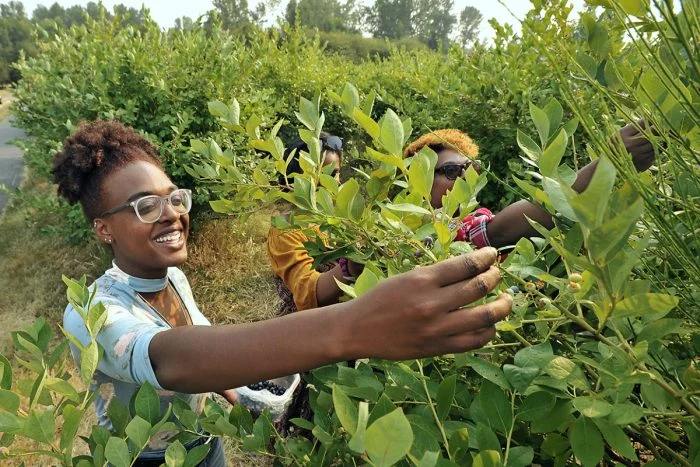
In the heart of Tacoma’s South End, a remarkable transformation is underway at Charlotte’s Blueberry Park, where a three-quarter-acre food forest, established in 2025, is redefining urban green spaces and confronting pervasive food insecurity. This ambitious project, built on a century-long legacy of community activism and land preservation, is cultivating not just edible plants but also a profound sense of belonging and self-sufficiency in a neighborhood grappling with limited food access and shrinking green canopy. The initiative stands as a beacon of hope, demonstrating how local communities can forge sustainable solutions to complex societal challenges, even as national economic pressures intensify.
Addressing a Growing Crisis: Food Insecurity in the South End
The inception of the food forest is deeply rooted in the pressing need to enhance food access within Tacoma’s South End, a vibrant and ethnically diverse area home to communities with ancestral ties spanning Mexico, Southeast Asia, and Africa. Despite its rich cultural tapestry, the neighborhood has long contended with the classification of a "food desert," a term describing areas with limited access to affordable and nutritious food. This challenge has been exacerbated by recent commercial shifts, including the closure of a Fred Meyer grocery store on Pacific Avenue in September 2025, with another closure anticipated in January 2027. These developments place additional strain on residents, many of whom already face limited transportation options.
Rachel Kunze, who has dedicated five years to the all-volunteer South End Neighborhood Council (SENC), articulated the severity of the situation. “The South End is a rectangle. I-5 wraps around the streets, and almost all of our grocery stores are in the front third of the rectangle. The back two-thirds of the population rely on one small Safeway and one tiny WinCo. It’s essentially a food desert,” Kunze explained, highlighting the geographical and logistical barriers residents encounter daily. Robb Krehbiel, a volunteer steward with the park, further emphasized the economic impact on the working-class neighborhood: “We’re also a working-class neighborhood, so the increases in prices of almost everything hit us hard.” This sentiment resonates with national trends, where an estimated 48 million Americans are currently confronting food insecurity, a figure exacerbated by new tariffs, the Iran war, and significant cuts to the Supplemental Nutrition Assistance Program (SNAP). A Republican budget bill passed in July 2025 alone led to over five million people losing vital food assistance, underscoring the critical need for community-led food initiatives like Tacoma’s food forest.
Beyond mere proximity to grocery stores, the community consultation phase for the food forest revealed a more nuanced challenge: the scarcity of culturally significant ingredients in conventional retail outlets and food banks. For a neighborhood as diverse as the South End, access to foods integral to cultural heritage is not merely a preference but a matter of identity and well-being. The food forest, while not designed to replace traditional grocery sources, aims to bridge this gap, offering residents a direct connection to both familiar and novel edibles while fostering knowledge about local growing possibilities.

A Legacy of Preservation: The Evolution of Charlotte’s Blueberry Park
The narrative of the food forest is inextricably linked to the remarkable history of Charlotte’s Blueberry Park itself, a 23-acre expanse that has repeatedly been saved from development through persistent community advocacy. The land’s agricultural roots trace back to 1929, evolving into the family-run Berg Blueberry Farm between 1952 and 1968. Its fate hung in the balance in 1968 when it was sold to the Tacoma School District for a proposed high school. However, an organized and vocal neighborhood group successfully opposed these plans, leading the district to abandon the development.
A pivotal moment arrived in 1994 when the school district exchanged 23 acres of the northern property section with Parks Tacoma for a portion of Manitou Park, intended for an elementary school. Even then, the vision for the land was not without contention. Neighbors once again rallied, securing grants and crafting plans to clear unwanted vegetation and preserve the thousands of blueberry bushes that defined the landscape. Their efforts bore fruit, and in 1997, Parks Tacoma officially designated it "Blueberry Park." The park received its current name, Charlotte’s Blueberry Park, in 2010, honoring the late Charlotte Valbert, a tireless advocate and founder of the Friends of Blueberry Park volunteer group, whose dedication transformed the park into a cherished community asset.
Today, the park boasts over 4,000 blueberry bushes across five varieties, offering free public picking from July to September. Beyond its role as a food source, the park serves vital ecological functions: its wetlands naturally filter pollutants, contributing to the city’s drinking water supply, while its extensive tree canopy and vegetation provide crucial wildlife habitat and help mitigate urban heat island effects. In 2018, the park further expanded its community offerings with a dedicated garden space, allowing residents to cultivate their own produce and donate surplus to South Tacoma residents and local food banks. This continuous thread of community engagement, from early preservation battles to ongoing maintenance by monthly work parties and weekly litter pickups, underscores the park’s deep integration into the neighborhood’s social fabric.
Cultivating a Year-Round Ecosystem: The Food Forest Emerges
Despite its successes, the park has not been immune to challenges, including instances of vandalism and drug use. These issues, particularly pronounced outside the peak blueberry season, spurred organizers to seek innovative ways to enhance park safety and usability throughout the year. Kevin Johnson, community and special projects coordinator with Parks Tacoma, articulated this vision: “We needed to find a way to make the park safer, bring more people in, and extend the seasonality of it.”

The opportunity for a new chapter arrived in fall 2024, when the SENC, on behalf of Parks Tacoma, applied for a grant from the Washington State Department of Natural Resources. In March 2025, their efforts were rewarded with a substantial $171,000 grant, paving the way for the food forest. The planning phase was a testament to community-led design, prioritizing cultural relevance and ecological viability. Rachel Kunze spearheaded an extensive consultation process, engaging local organizations, circulating surveys, and conducting in-depth conversations with gardeners from diverse cultural backgrounds, including Mexican, Vietnamese, and Cambodian communities. This collaborative approach sought to identify culturally important foods often missing from local stores and to determine which plants could flourish in Washington’s climate.
The consultations revealed fascinating insights into shared agricultural heritage and diverse culinary practices. “There were many plants that each group used a different part of for different reasons,” Kunze noted, citing marigolds as an example with cultural significance in both Indian and Mexican traditions. This "multicultural mind-meld" fostered a sense of shared discovery and collective ownership over the project.
The resulting food forest, meticulously designed using permaculture principles, is structured into three distinct zones. One section is dedicated to fruit and nut trees, including heritage apple varieties; another focuses on plants native to the Pacific Northwest, celebrating indigenous flora; and a third features subtropical produce, selected to resonate with the diverse palates of community members. Currently, the forest boasts an impressive array of 69 fruit and nut trees representing 27 species, alongside 17 types of fruit shrubs, including persimmons, pomegranates, pears, gooseberries, and guava. Additionally, it nurtures 31 types of perennial vegetables and herbs, as well as various medicinal plants, creating a rich tapestry of biodiversity and potential food sources.
Growing subtropical plants in Washington’s cooler climate presented a unique challenge, requiring careful research and collaboration. Johnson and his team consulted local nurseries and sought expertise from established initiatives like the Beacon Food Forest, a seven-acre community food forest in South Seattle, to ensure the successful selection and cultivation of species. While many plants are still young and establishing themselves, promising signs are already evident. Mac Capwell, a volunteer steward, enthusiastically reported, “Herbs like chives and mint are thriving already. And you’ll see lots of strawberry plants just waiting to take over in future years.” Larger yields are anticipated in the coming years, contingent on favorable growing conditions and sustained maintenance.
Beyond Harvests: Education and Community Empowerment
The food forest’s mission extends beyond merely providing food; it serves as a dynamic educational platform. Kevin Johnson envisions the forest as a vital resource for residents, particularly children in high-density apartment areas who may lack access to private yards. “People can take a few things and try them and learn about new foods as they interact with the space,” he said. “In high-density apartment areas, kids don’t have a backyard, so this will be their backyard and a place for them to put their hands in the dirt.” This hands-on learning experience is crucial for fostering an understanding of where food comes from, how it grows, and the interconnectedness of natural systems.

Parks Tacoma and the dedicated volunteer stewards harbor ambitions to expand the project over time, both in acreage and in the diversity of plants cultivated. This forward-looking approach reflects a commitment to the long-term sustainability and growth of this shared resource, ensuring it continues to serve the evolving needs of the South End community.
Navigating Challenges and Forging a Shared Future
The nascent stages of the food forest have not been without difficulties, mirroring some of the very issues that prompted its creation. Incidents of vandalism, including the theft of twelve mature trees, the disappearance of plant tags, and the discovery of drug paraphernalia, underscore the inherent complexities of managing a shared public resource. Kevin Johnson acknowledges that building community understanding and responsible usage will require time and sustained effort.
Questions have also arisen among residents regarding the management of the forest, particularly concerning plant protection and equitable access to its produce. “There has been a history of someone burning down things in the park, and a question of what if we put something in and that person destroys it?” Kunze relayed, highlighting legitimate community anxieties rooted in past experiences. These concerns point to a broader challenge: cultivating a deep sense of collective investment and guardianship among all residents. The long-term success of the food forest hinges not only on the ecological resilience of its plants but, more crucially, on whether the community embraces the space as their own, actively participating in its care and protection.
Despite these hurdles, the profound ambitions of the food forest are already manifesting. Just over a year since its establishment, it has unequivocally proven itself as a vibrant hub where neighbors can exchange knowledge, cultivate food, and actively shape a resource that, through generations, the community has fiercely fought to preserve. The journey of the Charlotte’s Blueberry Park food forest is a compelling testament to the power of community, demonstrating how dedication, collaboration, and a shared vision can transform a piece of land into a thriving ecosystem of food, culture, and resilience for generations to come. It serves as a powerful model for urban areas nationwide, illustrating that in the face of escalating food insecurity and environmental challenges, local action can indeed sow the seeds of a more equitable and sustainable future.