admin
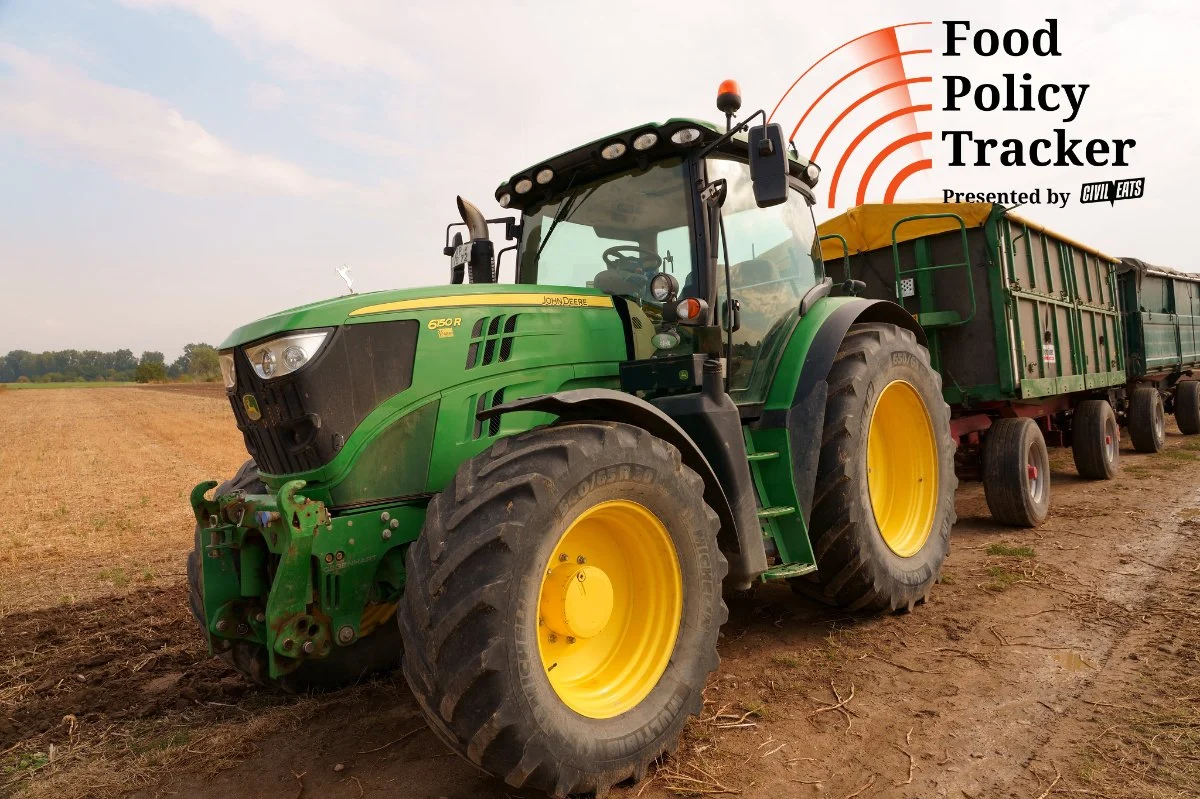
On October 20, 2026, President Donald Trump announced an $8 billion Harvest Fuel Relief Program during a campaign rally in Kansas, promising direct payments to farmers grappling with soaring diesel costs. The initiative, spearheaded by the U.S. Department of Agriculture (USDA), comes as Republicans face significant political headwinds ahead of the November midterm elections, exacerbated by the ongoing war in Iran, which has driven up fuel prices and broader inflation across the nation.
The New Relief Program and Its Immediate Impact
The newly unveiled Harvest Fuel Relief Program is designed to directly mitigate the financial strain on the nation’s agricultural sector by offsetting the high costs of diesel fuel. President Trump, speaking to a rally crowd in Kansas, confirmed that the $8 billion fund would be distributed by the USDA. The mechanism for these payments will utilize the Commodity Credit Corporation (CCC), the agency’s internal bank, a common vehicle for agricultural subsidies and aid programs.
Initially, the payments are slated for commodity farmers—those primarily engaged in growing staple crops such as soybeans and corn. These farmers are already integrated into existing federal agricultural support structures, making their eligibility for this new program more straightforward. The USDA’s press release elaborated that growers of specialty crops, including fruits, vegetables, and nuts, would also become eligible for payments at a "later date," a detail that has drawn both cautious optimism and questions from various agricultural advocacy groups.
The timing and location of the announcement were strategically chosen. President Trump was in Kansas to lend his support to Senator Roger Marshall, a Republican facing a tight race for reelection in the upcoming November midterms. During his speech, Trump explicitly linked Senator Marshall to the program’s inception and success. "Roger Marshall was the leader who fought for that to happen," Trump declared, underscoring the senator’s perceived instrumental role. The President further emphasized the political stakes, stating, "When Republicans win, we will pass even more funding for our farmers," framing the aid as a direct benefit of continued Republican governance. This move is widely seen as an effort to mobilize rural voters and bolster Republican candidates in key agricultural states.
Surging Fuel Costs: A Crippling Burden on Agriculture
The immediate impetus for the Harvest Fuel Relief Program is the dramatic escalation in diesel fuel prices, which have imposed an unprecedented financial burden on American farmers. According to data compiled by the American Farm Bureau Federation, the average price per gallon of farm diesel has surged from $3.01 in September 2025 to a staggering $5.61 by October 2026—an increase of over 86% in just over a year.
Diesel fuel is the lifeblood of modern agriculture. From powering tractors for planting, tilling, and harvesting to operating irrigation systems, drying grain, and transporting produce to market, virtually every aspect of farming relies heavily on diesel-powered machinery. This steep price hike means that many farms, particularly during the critical fall harvest season, are facing thousands, if not tens of thousands, of dollars in additional operational costs compared to previous years. These unexpected expenditures can severely erode profit margins, threaten farm viability, and ultimately impact food prices for consumers.
The National Farmers Union (NFU) has been vocal in warning about the "crushing" impact of these elevated costs on family farmers this season. The agricultural sector, already contending with fluctuating commodity prices, labor shortages, and rising input costs for fertilizers and seeds, finds itself particularly vulnerable to energy price volatility.
President Trump directly attributed a significant portion of the fuel price surge to his administration’s ongoing "war in Iran." While global oil markets are influenced by a multitude of factors—including supply and demand dynamics, geopolitical tensions, and refinery capacity—major conflicts in oil-producing regions like the Middle East often introduce a "risk premium" into oil prices. This premium reflects market fears of supply disruptions, which can lead to higher crude oil costs and, consequently, increased prices for refined products like diesel and gasoline. Trump expressed optimism, predicting that "as soon as that war ends, you’re going to see a plunge" in costs, asserting that "there’s so much oil and diesel around." However, analysts caution that the complex interplay of global energy markets means that price reductions are not always immediate or solely dependent on the resolution of a single conflict.
A Pattern of Emergency Aid: Historical Context
The $8 billion Harvest Fuel Relief Program is not an isolated incident but rather the latest in a series of substantial federal aid packages directed towards the agricultural sector during the Trump administration. Earlier this year, the USDA disbursed $12 billion in economic relief to farms. This followed an even larger allocation of $28 billion provided to farmers during Trump’s first term in office. These previous programs were also designed to offer economic relief, primarily targeting commodity farmers who often face volatile market conditions and international trade disputes.
However, these past distributions have drawn considerable scrutiny and criticism regarding their allocation. Analyses of the data, including reports from the Environmental Working Group (EWG) and Reuters, consistently found that the vast majority of this funding disproportionately benefited the largest and wealthiest agricultural operations. For instance, some reports indicated that the top 10 percent of farms received approximately half of the total funding, raising questions about equity and whether the aid truly supported the family farms most in need.
This pattern of significant direct payments, largely flowing to commodity farms, stands in stark contrast to other agricultural policy decisions made by the administration. Critics point out that simultaneously, funding for programs designed to support small farms, local food systems, and sustainable agricultural practices has seen significant reductions. This divergence highlights a contentious debate within agricultural policy: whether to prioritize large-scale commodity production through direct subsidies or to invest in a more diversified, localized, and resilient food system that supports a broader range of farm sizes and types.
Political Maneuvering and Policy Promises
The announcement of the Harvest Fuel Relief Program is deeply intertwined with the intense political landscape of the upcoming November midterm elections. With Republicans facing a challenging electoral environment, particularly given public concern over inflation and the ongoing conflict in Iran, the program serves as a tangible effort to address a critical economic pain point for a key demographic: rural voters.
President Trump’s promise of a "plunge" in fuel costs post-Iran war cessation, while economically simplistic, serves a clear political purpose: to frame the conflict as the sole driver of high prices and to present himself as the solution. This narrative attempts to deflect criticism regarding broader economic policies or the administration’s role in the conflict itself.
Beyond direct payments, the President also weighed in on another policy favored by agricultural groups: year-round E15 ethanol use. The National Farmers Union, in its pursuit of more long-term solutions to high fuel prices and a struggling farm economy, has advocated for policies that promote the use of fuels with higher ethanol content, such as E15 (a blend containing 15% ethanol). This policy would create a more stable market for corn growers, who produce the primary input for ethanol, and could potentially diversify the nation’s fuel sources, reducing reliance on fossil fuels.
Trump explicitly supported the E15 policy, which requires Congressional approval. However, he immediately linked its passage to the outcome of the Kansas Senate race. "With Roger Marshall in the Senate, we’ll make E15 year-round permanent, but if Adam Hamilton is in," he stated, referring to Marshall’s Democratic opponent, "I’m not doing it." This statement underscores the highly politicized nature of agricultural policy, where critical legislative decisions are openly tied to electoral outcomes, further emphasizing the stakes for Senator Marshall’s campaign and the broader Republican agenda. The E15 issue, therefore, becomes not just an environmental or economic policy, but a key component of the Republican midterm strategy in agricultural states.
Industry Reactions and Calls for Systemic Change
While the immediate financial relief offered by the Harvest Fuel Relief Program is acknowledged by some, the announcement has also elicited significant criticism and calls for more fundamental, long-term solutions to the agricultural sector’s systemic challenges.
Rob Larew, President of the National Farmers Union (NFU), articulated a nuanced perspective. He conceded that the new program would undoubtedly "help some farmers" in the short term. However, he quickly raised concerns regarding its equitable distribution, particularly questioning "how it will serve specialty-crop growers," who are slated for payments at a "later date." More pointedly, Larew argued that the losses being addressed by this emergency aid were "largely foreseeable," suggesting that proactive policy measures could have mitigated the current crisis. "The need for repeated emergency aid is a clear sign that the farm safety net is failing family farmers," Larew stated, advocating for a shift away from a cycle of ad hoc relief. Instead, he called for policies that provide "long-term certainty and investment in diversifying our fuel sources with renewable options."
Echoing this sentiment, Sarah Carden, Senior Director of Research and Policy at Farm Action, offered an even sharper critique, labeling the latest fuel relief program as merely a "short-term fix to a systemic problem." Carden argued that the administration’s approach fails to address the root causes of farmers’ economic distress. "Instead of addressing the policies and corporate power driving up costs and squeezing farm incomes, the administration continues to rely on taxpayer dollars to keep farmers afloat," she asserted. Farm Action’s stance aligns with a growing movement advocating for structural reforms within the agricultural economy that tackle issues like market concentration, anti-competitive practices by large corporations, and a more equitable distribution of power and profit along the food supply chain. Carden concluded by urging the administration to "stop celebrating record farm bailouts and start fixing the broken agricultural economy that makes them necessary."
These statements from prominent farmer advocacy groups highlight a deep-seated tension within current agricultural policy: the reliance on emergency, often politically motivated, direct payments versus the demand for comprehensive, structural reforms that would create a more resilient, equitable, and sustainable agricultural system capable of withstanding economic shocks without constant taxpayer intervention.
Broader Implications: Economic, Political, and Agricultural
The Harvest Fuel Relief Program carries significant implications across economic, political, and agricultural spheres, extending far beyond the immediate relief it provides.
Economic Implications:
While the $8 billion program offers a crucial lifeline to farmers burdened by high diesel costs, its long-term economic efficacy is subject to debate. Critics argue that repeated direct payments, especially those funded through mechanisms like the Commodity Credit Corporation (which essentially draws from taxpayer funds), can create market distortions. By buffering farmers from true market signals, such aid might inadvertently disincentivize innovation in fuel efficiency or diversification into less fuel-intensive farming practices. Furthermore, the sheer volume of government spending, particularly when added to previous aid packages, raises questions about the overall taxpayer burden and its potential contribution to broader inflationary pressures if not carefully managed within the national budget. The effectiveness of the aid also remains uneven, with analyses suggesting that larger operations tend to benefit disproportionately, potentially widening the gap between different farm sizes and types.
Political Implications:
The timing of the announcement, just weeks before critical midterm elections, underscores its primary political objective. President Trump’s active campaigning for Senator Roger Marshall, and his explicit linkage of the program’s passage and future agricultural policies to Republican electoral success, highlights the program’s role as a tool for voter mobilization and solidifying support in key agricultural districts. Should Marshall win, the program will likely be hailed as a success story of Republican governance and Trump’s continued influence. Conversely, if Republicans fare poorly in the midterms, the effectiveness of such last-minute aid packages in swaying voters might be questioned. The use of executive authority via the USDA and CCC for politically advantageous announcements also raises broader concerns about the politicization of government agencies and resources.
Agricultural Policy Implications:
The program reignites longstanding debates about the fundamental structure of agricultural policy in the United States. The emphasis on direct payments for commodity farmers, even while specialty crop growers face delays, perpetuates the equity issue within federal farm programs. Advocacy groups like the NFU and Farm Action consistently argue for a reevaluation of the "farm safety net," questioning whether it adequately serves all farmers or merely perpetuates a cycle of dependence on ad hoc relief. There is a growing call for the next Farm Bill to prioritize long-term investments in diversified fuel sources, renewable energy options for farms, and policies that address corporate power and market concentration. This would aim to create a more resilient agricultural sector that is less susceptible to global price shocks and geopolitical instability, fostering greater self-sufficiency and economic stability for family farmers across the spectrum. The ongoing tension between immediate political needs and the pursuit of sustainable, equitable agricultural solutions remains a central challenge for policymakers.
In conclusion, President Trump’s $8 billion Harvest Fuel Relief Program provides much-needed immediate financial relief to American farmers struggling with unprecedented diesel costs, largely driven by the ongoing war in Iran. Strategically announced in a pivotal midterm election state, the program serves both an economic and a significant political purpose. However, its unveiling simultaneously underscores deeper, unresolved issues within the agricultural economy, sparking renewed calls from industry advocates for systemic reforms, equitable distribution of aid, and long-term investments in a more resilient and sustainable future for American agriculture, rather than a continued reliance on emergency bailouts. The debate over how best to support the nation’s farmers will undoubtedly continue to shape agricultural policy and political discourse well beyond the upcoming elections.